
How Dental Crowns Restore and Protect Damaged Teeth
A tooth can become damaged for many reasons. Decay may weaken its structure, an old filling may leave only a small amount of natural tooth remaining, or an unexpected crack can make chewing uncomfortable. In other cases, years of wear or previous dental treatment can leave a tooth needing additional protection.
Fortunately, damage does not always mean that a tooth has to be removed.
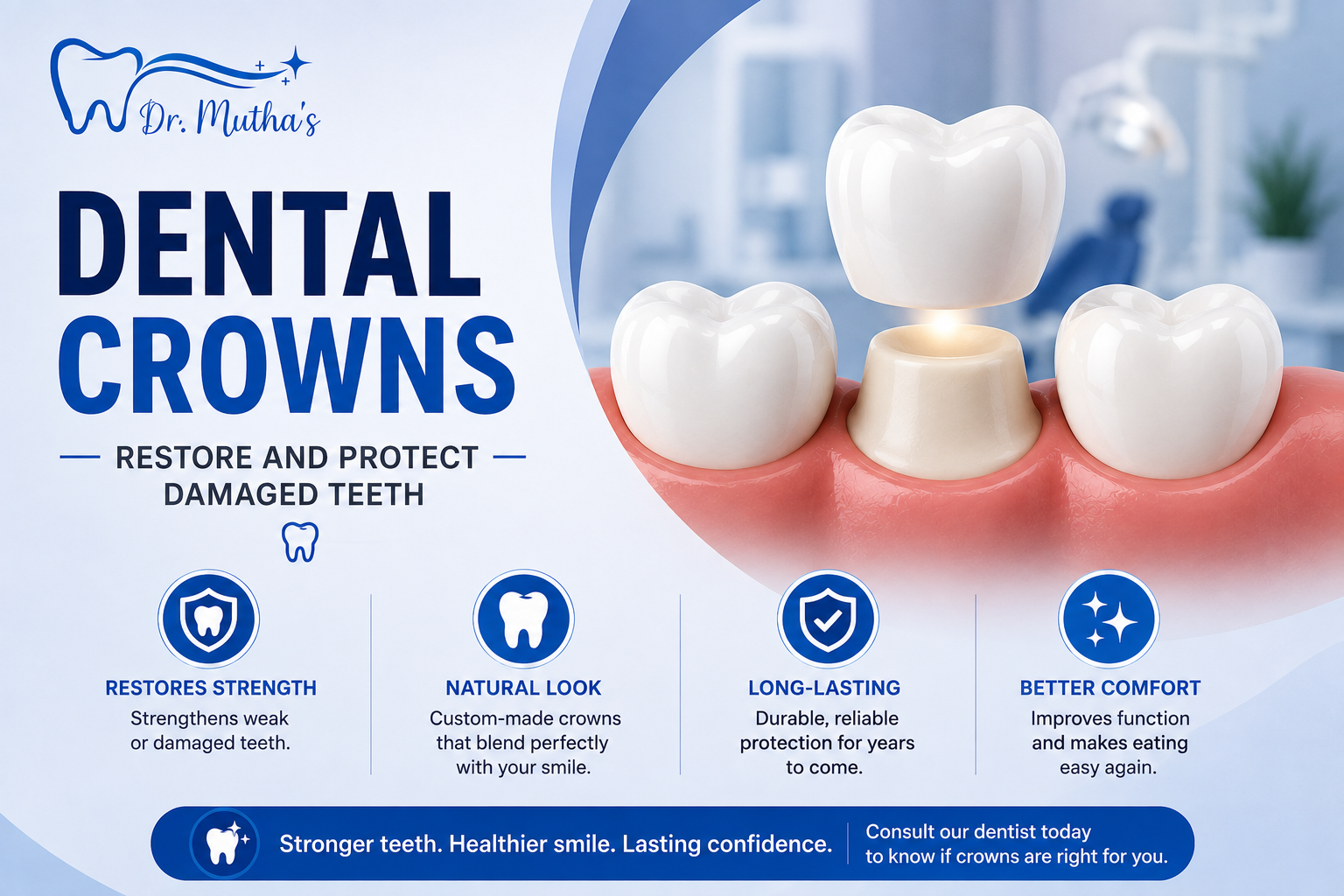
When enough healthy tooth structure remains, a dental crown may be used to restore and protect the tooth. A crown covers the prepared portion of the tooth and helps rebuild its shape, strength, and function.
But when does a damaged tooth actually need a crown, and how does the treatment work? Understanding the purpose of dental crowns can help you have a more informed conversation with your dentist about your treatment options.
What Is a Dental Crown?
A dental crown is a custom-made restoration that fits over a prepared tooth. It is sometimes referred to as a dental cap because it covers the visible portion of the tooth above the gum line.
Unlike a filling, which replaces a specific area of missing tooth structure, a crown provides broader coverage.
This can be particularly useful when a tooth has been significantly weakened and a smaller restoration may not provide enough support.
Crowns are designed according to the individual tooth. The dentist considers its position, shape, bite, remaining structure, and appearance before planning the restoration.
Why Do Damaged Teeth Sometimes Need Crowns?
Minor dental damage does not necessarily require a crown.
For example, a small cavity may often be treated with a filling. However, as more natural tooth structure is lost, the remaining tooth may become less able to withstand normal biting and chewing forces.
A crown may be considered when a tooth has the following:
- Extensive decay
- A large existing filling
- A crack or fracture
- Significant wear
- Lost a considerable amount of natural structure
- Undergone certain root canal treatments
- Become structurally weakened for another reason
The purpose is not simply to cover the tooth. The restoration should help the tooth function while protecting the remaining structure.
How Does a Dental Crown Restore a Tooth?
When part of a tooth breaks or is lost because of decay, its natural shape can change.
This may affect chewing, biting, and how the tooth contacts neighbouring or opposing teeth.
A crown is designed to rebuild the external shape of the damaged tooth. It can restore areas that have been lost and recreate an appropriate chewing surface.
The dentist also considers how the crown fits into your overall bite.
A well-planned crown should therefore do more than improve the appearance of a tooth. It should restore useful function while working appropriately with the surrounding teeth.
How Does a Crown Protect a Weakened Tooth?
Imagine a tooth with a very large filling and only thin walls of natural tooth structure remaining.
Those remaining sections may be more vulnerable to further damage.
In appropriate cases, placing a crown over the prepared tooth provides coverage around the remaining structure and helps distribute forces during biting and chewing.
This is one reason a dentist may recommend a crown before the tooth experiences additional structural damage.
However, a crown cannot make every weakened tooth suitable for restoration. The dentist must first determine whether enough healthy tooth structure remains and whether the tooth has an appropriate foundation for treatment.
When Is a Dental Crown the Right Choice?
A dental crown is not automatically necessary whenever a tooth is chipped, cracked, or decayed.
The decision depends on the individual condition of the tooth.
A dentist may consider the following:
- How much healthy tooth remains
- Size and location of the damage
- Presence of cracks
- Condition of existing fillings
- Tooth position
- Biting forces
- Condition of the gums and supporting tissues
- Previous dental treatment
In some situations, a filling or another restoration may be sufficient. In others, greater coverage may be recommended.
If you are trying to understand whether a crown may be suitable for your tooth, learn when dental crowns can be the right choice for damaged teeth. Knowing the reasons behind crown treatment can help you discuss your options more confidently with your dentist.
Can a Crown Help a Cracked or Broken Tooth?
Sometimes.
A tooth with a damaged or fractured portion may benefit from a crown when the remaining structure is suitable for restoration.
The crown can rebuild the missing external structure while covering the prepared tooth.
However, cracks vary considerably.
A small structural problem is different from a crack that extends deeply through the tooth or affects areas that make predictable restoration difficult.
This is why a cracked tooth should be professionally assessed rather than assuming that a crown can always save it.
Why Are Crowns Sometimes Used After Root Canal Treatment?
Root canal treatment addresses problems involving the pulp inside a tooth. Once the treatment is complete, the tooth still requires an appropriate final restoration.
In certain situations, particularly when considerable tooth structure has already been lost, a crown may be recommended to provide additional protection.
Back teeth can experience significant chewing forces, which may also influence the restorative treatment plan.
However, not every root canal-treated tooth automatically requires exactly the same restoration. The dentist evaluates the tooth and determines what type of final restoration is appropriate.
What Types of Dental Crowns Are Available?
Dental crowns can be made using different materials.
Ceramic or Porcelain Crowns
These crowns can provide a natural tooth-like appearance and may be considered when aesthetics are important.
Zirconia Crowns
Zirconia is a dental ceramic used for various crown restorations. Different forms are available depending on the clinical and aesthetic requirements.
Porcelain-Fused-to-Metal Crowns
These restorations combine an underlying metal structure with a porcelain exterior.
Metal Crowns
Metal-based restorations may still be considered for certain teeth and clinical situations.
There is no single crown material that is ideal for every patient.
The appropriate choice depends on the tooth being treated, bite, available space, aesthetic expectations, and other clinical factors.
What Happens During the Dental Crown Procedure?
Treatment begins with an examination of the tooth.
Dental imaging may also be needed to understand the condition of the tooth, roots, surrounding bone, or previous treatment.
If a crown is appropriate, the tooth is prepared to create enough space for the restoration.
Damaged or decayed material may need to be removed first. The dentist then shapes the remaining tooth so the crown can fit correctly.
An impression or digital scan records the prepared tooth and surrounding area. This information is used to create the final crown.
Depending on the treatment process, a temporary crown may be placed while the final restoration is prepared.
During final placement, the dentist checks the crown's fit, bite, contacts with neighbouring teeth, and appearance before securing it.
What Should You Know About a Temporary Crown?
A temporary crown protects the prepared tooth until the final restoration is ready.
Because it is temporary, you may receive specific instructions about chewing and cleaning around it.
Avoid unnecessarily pulling or picking at the temporary restoration.
If it becomes loose or falls out, contact your dental clinic for guidance rather than trying to permanently fix it yourself.
Can a Tooth Still Develop Decay Under a Crown?
Yes.
A common misconception is that once a tooth has a crown, it can no longer develop decay.
Natural tooth structure remains underneath and around the edges of the restoration. Plaque can accumulate where the crown meets the tooth.
If this area is not cleaned properly, decay can develop around the crown margin. Gum problems can also occur.
A crowned tooth therefore still needs regular brushing, interdental cleaning, and dental examinations.
How Should You Care for a Dental Crown?
Caring for a crown is closely connected to caring for the rest of your mouth.
Good habits include:
- Brushing thoroughly every day
- Cleaning between your teeth regularly
- Paying attention to the gum line around the crown
- Attending routine dental examinations
- Avoiding biting hard non-food objects
- Getting a loose or damaged crown checked
If you grind or clench your teeth, discuss this with your dentist because excessive forces may affect natural teeth as well as restorations.
How Long Can a Dental Crown Last?
There is no guaranteed lifespan for a dental crown.
How long it remains functional can depend on several factors, including oral hygiene, biting forces, the condition of the underlying tooth, crown material, grinding or clenching habits, and regular dental care.
Even a crown that looks fine from the outside should still be checked during routine dental visits.
The dentist can examine the crown margins, surrounding gums, bite, and underlying tooth for potential problems.
When Should You Have a Crown Checked?
Contact your dentist if you notice:
- A crown that feels loose
- Pain when biting
- Persistent sensitivity
- A chipped or damaged crown
- Swelling around the crowned tooth
- Food repeatedly becoming trapped around it
- A noticeable change in your bite
These symptoms do not automatically mean the crown has failed, but they are good reasons to have the area assessed.
Frequently Asked Questions
Is a crown better than a filling?
They serve different purposes. A filling may be appropriate for smaller areas of damage, while a crown may be recommended when the tooth has lost more structure and needs greater coverage.
Is getting a dental crown painful?
Local anesthesia may be used during tooth preparation. Some temporary sensitivity or gum tenderness can occur afterward. Speak with your dentist if discomfort is persistent or worsening.
Can a crown improve the appearance of a damaged tooth?
Depending on the material and clinical situation, a crown can restore the shape and appearance of a damaged tooth while also providing functional restoration.
Does a crowned tooth still need regular dental check-ups?
Yes. Both the crown and the natural tooth underneath should be monitored. Regular examinations can help identify problems around the crown margins, gums, or bite.
Can every broken tooth be restored with a crown?
No. Whether a tooth can receive a crown depends on the extent and location of the damage, remaining healthy structure, and other clinical factors.
Restore the Tooth, Not Just Its Appearance
A dental crown can be an important restorative option when a tooth has been weakened by extensive decay, fractures, large fillings, wear, or previous treatment.
Its purpose extends beyond appearance. A properly planned crown can rebuild the shape of a damaged tooth, restore useful biting and chewing function, and help protect the remaining natural structure.
However, successful crown treatment starts with the right diagnosis. Not every damaged tooth needs a crown, and not every severely damaged tooth can be restored with one.
Concerned about a cracked, weakened, or heavily filled tooth? Schedule a dental evaluation at Dr. Mutha's Dental to understand the extent of the damage and whether a crown or another restorative treatment is appropriate for protecting your tooth.
 Romaian
 English
 Arabic
 French
 Spanish
 Portuguese
 Deutsch
 Turkish
 Dutch
Dutch
 Italiano
 Russian
 Portuguese (Brazil)
 Greek
Greek