
What is a Biogas Plant?
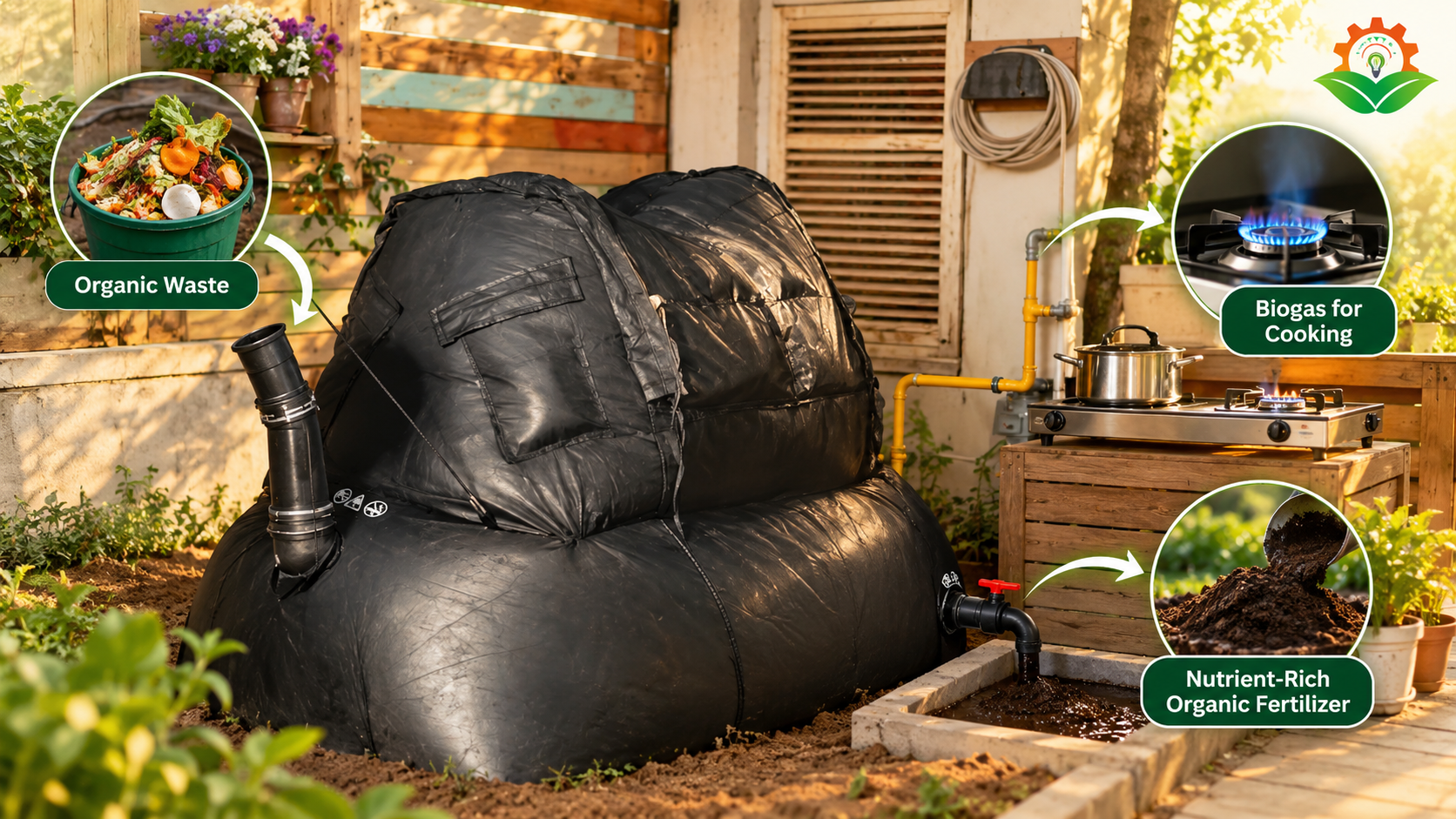
A dairy farmer managing 15 cattle often faces two recurring problems: rising LPG expenses and the daily challenge of disposing of animal waste. Instead of treating organic waste as a burden, many households and farms now convert it into clean cooking fuel through a biogas plant. This simple yet effective waste-to-energy solution uses anaerobic digestion to transform biodegradable waste into methane-rich gas and nutrient-rich fertilizer, making it an efficient investment for both rural and semi-urban applications.
Whether installed on a small farm or as a biogas plant for home, the technology helps reduce fuel costs, minimize waste disposal issues, and promote sustainable energy generation.
What is a Biogas Plant?
A biogas plant is an engineered system that converts biodegradable organic waste into combustible biogas through a natural biological process called anaerobic digestion. Unlike open decomposition, this process takes place inside an airtight digester where naturally occurring bacteria break down organic material without oxygen.
The resulting gas mainly consists of methane (CH₄) and carbon dioxide (CO₂). Methane serves as a renewable fuel for cooking, water heating, and even electricity generation using appropriately sized generators. The remaining bio-slurry becomes an excellent organic fertilizer for agriculture.
How a Biogas Plant Works
The process follows several engineering stages:
- Organic waste is mixed with water to form a slurry.
- The slurry enters the airtight digester tank.
- Anaerobic microorganisms decompose the waste over a controlled retention period.
- Methane-rich gas accumulates inside the gas storage chamber.
- Gas is delivered through pipelines to appliances.
- Digested slurry exits through the outlet chamber for agricultural use.
The efficiency of digestion depends on proper feedstock quality, operating temperature, hydraulic retention time, and digester design.
Feedstock Used in Biogas Plant Systems
Modern biogas plant systems can process a wide variety of biodegradable materials, including:
- Kitchen food waste
- Cow dung and animal manure
- Poultry litter
- Agricultural crop residues
- Vegetable market waste
- Fruit processing waste
- Organic food industry waste
Animal manure provides beneficial bacteria that accelerate digestion, while food waste contributes higher methane production due to its energy-rich organic content.
Digester Design and Gas Storage Engineering
An efficient biogas plant design balances biological performance with structural reliability.
The digester tank is sized according to the expected daily waste input and the required hydraulic retention time, which generally ranges between 30 and 60 days depending on climate conditions.
Gas storage may be integrated into the digester dome or provided through an external flexible gas holder. Storage capacity should match daily cooking or energy consumption without causing unnecessary pressure fluctuations.
Durable construction materials such as reinforced concrete, HDPE, FRP, or specially designed steel tanks improve corrosion resistance and operational life.
Sizing a Biogas Plant Correctly
Choosing the correct plant size is one of the most important engineering decisions.
Sizing depends on:
- Daily quantity of organic waste available
- Moisture content of feedstock
- Required cooking gas demand
- Number of household members
- Livestock population
- Future expansion requirements
An undersized digester produces insufficient gas, while an oversized system often suffers from poor bacterial activity and inefficient digestion.
Gas Delivery, Safety, and Appliance Compatibility
Gas generated by the plant is transported through corrosion-resistant pipelines equipped with isolation valves, moisture traps, and pressure regulation components.
Proper gas piping minimizes leakage and ensures safe operation.
A well-designed system can supply fuel to:
- Kitchen gas stoves
- Water heaters
- Community kitchens
- Small biogas generators
- Agricultural processing equipment
Pressure monitoring and regular leak inspections help maintain safe and reliable performance.
Bio-Slurry: More Than Just a By-Product
One of the biggest advantages of anaerobic digestion is the production of nutrient-rich bio-slurry.
Unlike raw manure, digested slurry contains stabilized nutrients that are easier for crops to absorb.
Benefits include:
- Improved soil fertility
- Better moisture retention
- Reduced chemical fertilizer usage
- Increased microbial activity
- Lower odor compared to untreated manure
Many farms recover a significant portion of their investment through improved agricultural productivity.
Key Features of Modern Biogas Plants
Modern engineered systems offer several practical advantages:
- Continuous gas generation throughout the year
- Compact installation footprint
- Effective odor control
- Durable corrosion-resistant tank materials
- Reliable operation across varying weather conditions
- Low daily maintenance requirements
- Easy-to-operate feeding system
- Scalable capacity for future expansion
- Long operational service life with proper maintenance
These features make today's systems suitable for both residential and commercial applications.
Applications of Biogas Plants
Biogas technology serves a wide range of users, including:
- Rural households
- Dairy and livestock farms
- Agricultural cooperatives
- Educational hostels
- Small hotels and farm stays
- Housing societies
- Community biogas projects
- Rural electrification initiatives
Growing interest in renewable energy has also increased demand among Biogas plant manufacturers in India, who now offer customized systems for diverse operational requirements.
Understanding Biogas Plant Price and Investment Factors
The overall Biogas plant price depends on multiple engineering and installation variables rather than just digester size.
Major cost factors include:
- Daily feedstock quantity
- Digester volume
- Tank material selection
- Required gas storage capacity
- Pipeline length and installation complexity
- Civil construction work
- Site preparation
- Integration with cooking or generator systems
- Annual maintenance contracts (AMC)
Although initial investment varies, long-term savings from reduced LPG consumption, lower waste management costs, and fertilizer production often provide an attractive payback period.
Buyer's Guide: Choosing the Right Manufacturer
Selecting an experienced manufacturer is as important as selecting the plant itself.
Consider the following before making a purchase:
- Proven industry experience
- Strong biogas plant design capabilities
- High manufacturing standards
- Customization options
- Installation expertise
- Technical documentation
- Subsidy assistance where applicable
- Reliable after-sales service
- Preventive maintenance support
- Successful project portfolio
Organizations like Sigma Power Tech manufacturer and service provider focus on complete engineering support—from system design and manufacturing to installation, commissioning, and long-term maintenance. A Sigma Power Tech biogas plant is typically engineered to deliver dependable gas production while emphasizing durability, operational efficiency, and lifecycle performance.
Common Mistakes to Avoid
Many performance issues arise from avoidable planning errors.
Common mistakes include:
- Choosing the wrong digester size
- Inconsistent daily feedstock feeding
- Poor site selection
- Ignoring slurry utilization
- Inadequate maintenance planning
- Improper gas pipeline installation
- Neglecting seasonal temperature effects on digestion
Even a well-built Domestic biogas digester for homes and farms cannot perform efficiently without consistent feeding and proper operational practices.
Conclusion
A properly engineered biogas plant is much more than a waste disposal system—it is a sustainable energy solution that converts everyday organic waste into valuable cooking fuel and nutrient-rich organic fertilizer. Long-term performance depends on correct sizing, quality digester engineering, reliable gas handling, and disciplined maintenance rather than simply selecting the lowest-cost option.
Whether for a household, dairy farm, or community project, investing in a professionally designed system delivers long-term fuel savings, reduces dependence on conventional energy sources, improves waste management, and creates a reliable waste-to-energy infrastructure that supports sustainable agriculture for years to come.

 English
 Arabic
 French
 Spanish
 Portuguese
 Deutsch
 Turkish
 Dutch
 Italiano
 Romaian
 Portuguese (Brazil)
 Greek