
Wall Mount Medical Monitor Arm for Clinical Rooms
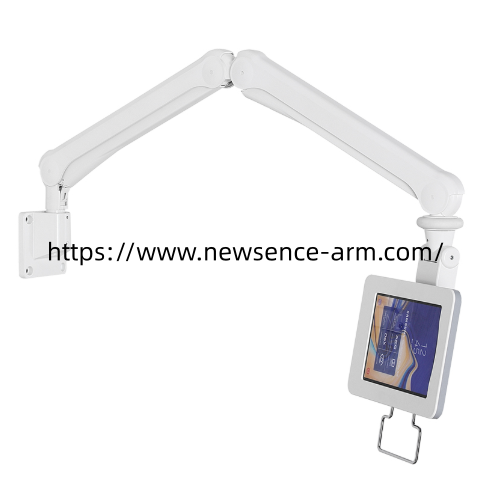
In modern healthcare environments, the arrangement of display equipment can influence how smoothly staff access and review information during daily tasks. Selecting a suitable Wall Mount Medical Monitor Arm gives medical facilities another way to organize screens while making better use of available wall space. When planning a new treatment room or updating an existing workstation, a Wall Mount Medical Monitor Arm can be considered as part of a broader workspace design that accounts for monitor positioning, staff movement, and equipment accessibility.
Making Better Use of Available Wall Space
Medical rooms often contain multiple pieces of equipment, work surfaces, storage units, and clinical devices. A desk-mounted display may occupy valuable working space, particularly in compact areas where staff need room for other tasks. A wall-mounted arrangement can help move the monitor away from the desktop and create a more open workstation.
Before choosing a mounting solution, facility planners should review the room layout and identify an appropriate installation position. The location should allow staff to view the screen comfortably without interfering with doors, cabinets, medical equipment, or normal movement around the room.
Wall structure is another important consideration. The mounting surface and fixing method should be checked to ensure they are appropriate for the monitor and support system. Early planning can reduce installation changes and help the equipment fit naturally into the workspace.
Considering Monitor Position and User Access
A monitor should be positioned according to the tasks performed at the workstation. Doctors, nurses, technicians, and other healthcare staff may use the same display from different working positions. A mounting arm with suitable adjustment functions can provide greater flexibility when the screen needs to be repositioned.
Buyers should consider the monitor's size, weight, mounting interface, and required viewing direction before selecting a product. The adjustment range should also match the available space. For example, a workstation close to a wall may require a different arm configuration from one with more open surrounding space.
Ease of adjustment matters as well. Staff should be able to position the display without unnecessary effort, while the monitor should remain stable in its intended position. Reviewing these practical details helps facilities select equipment that matches actual working conditions.
Newsence-Arm Product Selection Considerations
When comparing monitor support products, healthcare equipment buyers can begin by preparing a list of basic requirements. These may include monitor compatibility, load capacity, arm reach, adjustment range, installation method, and available workspace. A clear checklist makes it easier to compare product information from different suppliers.
Newsence-Arm provides monitor arm solutions for businesses and workspace equipment projects. Buyers interested in medical applications can review the product specifications and discuss installation requirements before confirming an order. It is useful to provide details about the monitor model, mounting location, and intended use so that product suitability can be evaluated more accurately.
Product documentation should also be reviewed during the selection process. Clear specifications help purchasing teams communicate with technical staff and ensure that the selected equipment matches the project requirements.
Coordinating Installation and Room Design
A successful installation depends on coordination between equipment buyers, facility planners, and installation personnel. Before work begins, teams should confirm the mounting height, wall construction, cable routing, and surrounding equipment positions. This preparation can help avoid conflicts with other fixtures and keep the workstation organized.
Cable management deserves particular attention. Display cables should have enough allowance for any permitted arm movement while remaining arranged to reduce tangling or accidental pulling. The installation team should follow the product instructions and applicable facility procedures when securing the mounting system.
After installation, staff can check the screen position, adjustment operation, cable arrangement, and stability. Any concerns should be addressed before the workstation enters regular use.
Supporting Future Workspace Changes
Healthcare spaces may change as departments update equipment, reorganize rooms, or introduce new working procedures. Choosing monitor support equipment with clear specifications can make future planning easier. Keeping product records, installation details, and compatibility information also helps maintenance teams understand the existing setup.
Facilities can periodically review whether monitor positions remain suitable for staff activities and whether any adjustments are needed. When replacement displays are considered, buyers should confirm that their dimensions and mounting requirements remain compatible with the existing support system.A thoughtful approach to monitor placement can contribute to a more organized clinical workspace. To explore available monitor arm options and discuss project requirements, visit https://www.newsence-arm.com/ and review the product information.
 Greek
 English
 Arabic
 French
 Spanish
 Portuguese
 Deutsch
 Turkish
 Dutch
 Italiano
 Russian
 Romaian
 Portuguese (Brazil)