
Why Does Fuel Choice Matter So Much for Winter Camping?
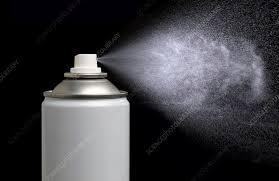
Winter camping has an honesty to it that other seasons lack. Gear either works or it does not, and the cold makes that distinction felt quickly. Among the choices that matter most, fuel tends to get underestimated until the moment it becomes obvious — usually somewhere around dawn, hands cold, stove sputtering, the Camping Gas Cartridge in your grip delivering almost nothing despite being far from empty.
Butane and isobutane both live inside their canisters as pressurised liquids. Both need to cross into gas form before they can do anything useful at a burner. The chemistry is similar enough that the two fuels look interchangeable on a shelf. In mild weather, they practically are. But temperature pulls them apart. Butane's vaporisation point sits uncomfortably close to freezing, close enough that a cold night, a shaded morning, or a canister that spent hours outside can push it below the threshold where it delivers a flame worth cooking on. The liquid stays put. The stove reflects this immediately and honestly.
Isobutane does not have this problem to the same degree. Its vaporisation threshold is lower, which means it keeps transitioning from liquid to gas in conditions where butane has effectively given up. On a genuinely cold mountain morning, that gap is not subtle. It is the difference between coffee and a frustrating performance from a stove that technically functions but practically does not.
Blended fuels are where most experienced winter campers settle, and the reasoning is straightforward. Adding propane to isobutane pushes the lower operating range down further still, since propane vaporises at temperatures colder than either of the other two. Pure propane works, in principle, but it requires heavy, thick-walled containers that bear no resemblance to the lightweight threaded canisters backpacking stoves are built around. A blended isobutane cartridge sidesteps that problem entirely — same familiar format, meaningfully better cold performance.
Canister warmth still matters regardless of what is inside. Even isobutane blends benefit from being warm before use. Leaving a cartridge inside a sleeping bag overnight, or keeping it against the body in a jacket pocket during the approach to a campsite, makes a real difference when the stove goes on. Cold metal draws heat away from the fuel, and a canister that starts warm sustains output longer before the temperature drop starts to bite. This costs nothing in weight or money. It is just a habit, and it is one worth building.
Stove choice enters the picture here too, though it often gets treated as a separate decision. Remote canister configurations and heat exchange burner designs help maintain fuel temperature during use, extending reliable performance into conditions where a standard setup would begin to struggle. For serious cold weather cooking, thinking about stove and cartridge together rather than separately tends to produce noticeably better results in the field.
Weight rarely complicates the isobutane choice. Modern blended cartridges come in the same lightweight threaded format used for three-season camping, so switching to a cold-appropriate fuel carries no additional burden. The Camping Gas Cartridge suited to winter is simply the one with chemistry that matches the conditions, and it happens to weigh and pack exactly the same as its warm-weather equivalent.
None of this is meant to dismiss butane. For mild temperatures and casual camping, it performs reliably and costs less. The problem is not butane itself. The problem is using it in conditions it was never well suited for, and then wondering why the stove is struggling on a frozen morning when the answer was always in the canister. Bluefire offers fuel cartridges formulated for a range of conditions including cold weather use. The full range is at https://www.bluefirecans.com/product/ .
 Portuguese
 English
 Arabic
 French
 Spanish
 Deutsch
 Turkish
 Dutch
Dutch
 Italiano
 Russian
 Romaian
 Portuguese (Brazil)
 Greek
Greek