
Why Choose Aluminum Wire ER5183 for Marine Vessel Welding
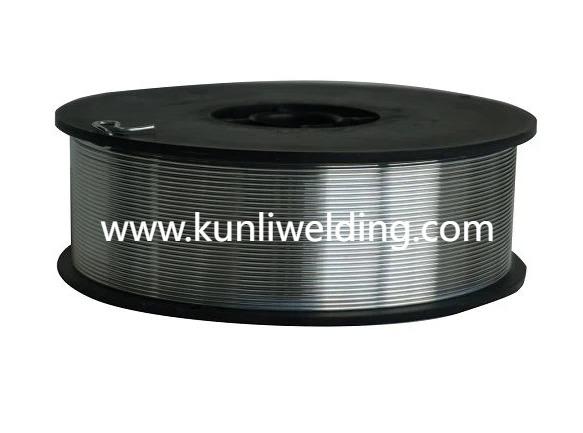
Marine fabrication demands welding consumables that deliver both structural integrity and corrosion resistance capable of withstanding decades of saltwater exposure. Boat builders working with aluminum face unique challenges from complex hull geometries, varying material thicknesses, and the critical importance of watertight seams that prevent catastrophic leaks. Aluminum Welding Wire ER5183 has become a trusted choice in marine construction through its combination of strength, corrosion resistance, and weldability characteristics suited to the demanding requirements of vessel fabrication.
Material preparation standards for marine welding exceed typical industrial requirements since contamination sources in boatyards include saltwater residue, marine growth, and atmospheric salt deposits. Thorough cleaning removing all surface contaminants prevents porosity and fusion defects that compromise watertight integrity. Dedicated stainless steel brushes used exclusively for aluminum preparation avoid cross contamination from ferrous metals that create galvanic corrosion sites. Chemical degreasers formulated for aluminum remove oils and handling residues that mechanical cleaning alone cannot eliminate.
Joint design considerations in boat building must accommodate hull curvature, structural loading patterns, and access limitations inherent in vessel construction. Butt joints in hull plating require complete penetration ensuring structural continuity and watertight sealing. Fillet welds attaching frames, stringers, and bulkheads must provide adequate strength while minimizing weight that affects vessel performance. Proper joint preparation including fit up tolerances and gap control proves critical since excessive gaps dilute filler metal chemistry while tight fits may trap contaminants preventing complete fusion.
Welding position challenges in boat construction demand filler metals performing reliably in flat, horizontal, vertical, and overhead orientations. Hull assembly often requires welding from awkward positions inside confined spaces where operator comfort and arc visibility prove limited. The balanced fluidity of magnesium bearing fillers allows controlled pool manipulation across positions without excessive sagging in overhead work or inadequate fill in vertical joints.
Preheat requirements depend on material thickness and ambient temperature conditions in fabrication facilities. Thicker sections and cold weather construction benefit from preheating that reduces thermal gradients and crack susceptibility. Marine grade aluminum alloys typically tolerate welding without preheat in moderate thicknesses, though controlling interpass temperatures on multi pass welds prevents excessive heat accumulation that degrades mechanical properties in heat affected zones.
Shielding gas selection influences arc characteristics and weld quality in marine applications. Pure argon remains standard for aluminum welding, providing adequate shielding while maintaining stable arc behavior. Some fabricators add small helium percentages increasing heat input and penetration on thicker materials, though pure argon proves adequate for typical boat building thicknesses. Gas flow rates must account for drafts in open fabrication facilities where air movement can disrupt shielding allowing atmospheric contamination.
Distortion control becomes critical in hull construction where panel flatness affects hydrodynamic performance and aesthetic appearance. Welding sequences that balance heat input symmetrically across assemblies minimize warping that requires costly straightening operations. Tack welding at strategic locations maintains alignment during final welding while allowing controlled stress relief through planned gaps that close as welding progresses. Fixture design supports panels without excessive restraint that would increase residual stresses promoting distortion.
Crack prevention strategies address the sensitivity of higher strength aluminum alloys and thick sections to solidification cracking. Maintaining appropriate travel speeds prevents excessively rapid cooling that increases crack susceptibility. Avoiding crater cracks at weld terminations requires proper runoff techniques or crater filling procedures. Highly restrained joints benefit from stress relief measures or alternative joint designs reducing constraint forces during weld cooling.
Inspection procedures for marine welds include visual examination, penetrant testing, and sometimes radiographic analysis for critical structural joints. Watertight integrity testing using pressure or vacuum methods verifies seam quality before launching vessels where leaks create serious consequences. Documenting inspection results provides quality records supporting warranty claims and regulatory compliance requirements for commercial vessels.
Corrosion protection beyond inherent filler metal resistance includes proper surface preparation and coating application after welding. Weld cleaning removes oxide residue and heat tint that could interfere with coating adhesion. Conversion coatings or anodizing treatments enhance natural corrosion resistance while providing uniform appearance across welded assemblies. Proper coating selection and application technique extends service life in aggressive marine environments where unprotected aluminum eventually deteriorates.
Production efficiency in boat building benefits from qualified welding procedures developed through testing and refined through production experience. Documented procedures specifying parameters, techniques, and quality requirements enable consistent results across multiple welders and production shifts. Procedure qualification through destructive testing verifies mechanical properties and establishes parameter ranges producing acceptable joints reliably.
Welder qualification ensures operators possess skills necessary for quality marine fabrication. Testing candidates on representative joints in various positions confirms competency before assigning production work. Ongoing performance monitoring through random inspection maintains quality standards while identifying retraining needs before defect rates increase.
Material handling practices preserve filler metal quality from storage through consumption. Climate controlled storage preventing moisture exposure protects wire from contamination causing porosity. First in first out inventory rotation uses material before surface oxidation degrades welding characteristics. Proper wire feeding equipment maintenance including clean liners and appropriately sized contact tips ensures smooth material delivery supporting consistent arc behavior.
Documentation systems tracking material lots, welding parameters, and inspection results support quality assurance while enabling investigation when issues arise. Traceability linking completed welds to specific conditions facilitates root cause analysis improving processes and preventing recurrence. These records prove valuable for warranty administration and demonstrate quality commitment to customers.
Continuous improvement efforts analyze defect patterns identifying opportunities for procedure refinement or training enhancement. Feedback loops connecting fabrication floor observations with engineering review creates organizational learning supporting quality advancement. Collaboration between welders, supervisors, and quality personnel develops solutions addressing recurring challenges. Marine fabricators seeking comprehensive guidance on filler metal selection, welding procedures, and quality verification for aluminum boat construction can access detailed technical resources and application support. Information addressing Aluminum Welding Wire ER5183 implementation in vessel fabrication and marine structural applications is available at https://kunliwelding.psce.pw/8p6qdv . Systematic approaches to material preparation, procedure development, and quality assurance create foundations for reliable marine welding supporting vessel performance and longevity throughout operational service in demanding saltwater environments.
 Greek
Greek
 English
 Arabic
 French
 Spanish
 Portuguese
 Deutsch
 Turkish
 Dutch
Dutch
 Italiano
 Russian
 Romaian
 Portuguese (Brazil)