
Why Does Opey's Leash Weaving Method Change Everything?
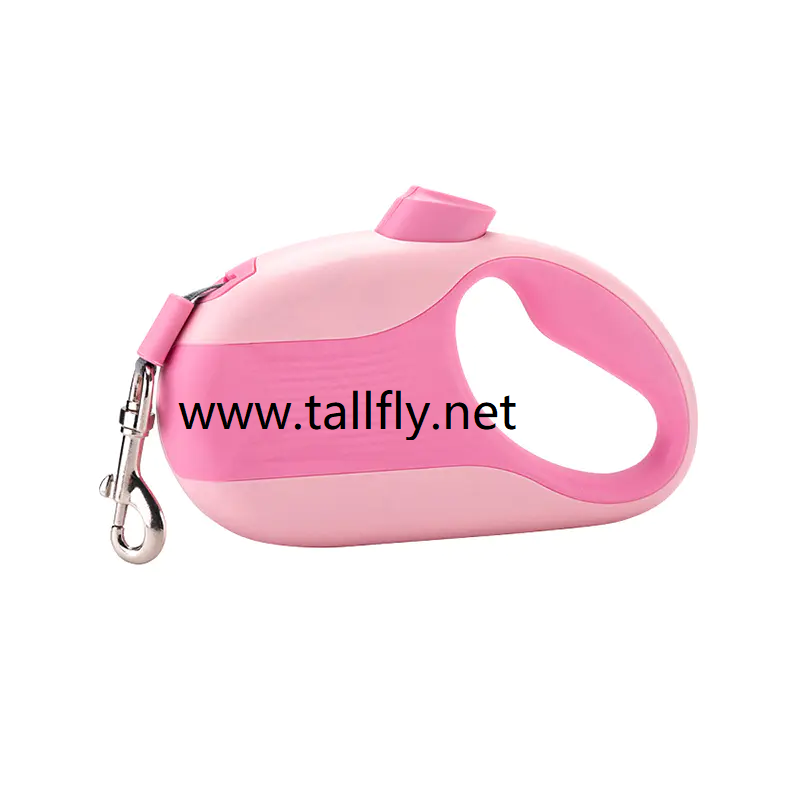
Every time a pet owner clips a leash onto a collar and steps outside, they are trusting a manufacturing process they have almost certainly never seen. Yet sourcing from a qualified Dog Leash Factory is only the beginning of understanding why two leashes made from identical-looking webbing can perform at completely different levels under real-world stress. The answer lies not in the material label but in the precision and sequence of the production steps that transform raw fiber into a finished, reliable product.
Stage One: Fiber Selection and Yarn Preparation
Professional leash production begins before any weaving takes place. Raw polymer granules — nylon, polyester, or polypropylene — are extruded into continuous filaments and twisted into yarn. The denier count of this yarn, representing mass per unit length, is the first quality decision in the production chain. A manufacturer choosing a lower denier to reduce material costs is making a tradeoff that no amount of downstream processing can fully recover.
Yarn tension during the winding and preparation stage must be carefully controlled. Uneven tension across a yarn package introduces inconsistency in the downstream weaving process, producing webbing with variable density across its width. This kind of variation is invisible to the naked eye but creates zones of reduced tensile strength that can fail unpredictably under load.
Stage Two: Webbing Weaving and Density Control
The weaving stage defines the structural character of the finished webbing. Needle looms interlace warp and weft yarns at defined densities measured in picks per centimeter — a higher pick count produces denser, heavier, more abrasion-resistant webbing, while a lower count reduces weight and cost at the expense of durability.
Loom speed must be balanced against weave quality. Running looms at maximum speed to meet production quotas introduces vibration and tension variation that reduces weave consistency. Reputable manufacturers set loom speeds below theoretical maximum to maintain dimensional tolerance, accepting slightly lower output in exchange for consistent product quality. Webbing width tolerance is another controlled variable: width variation beyond ±0.5mm affects hardware fit and assembly accuracy downstream.
Stage Three: Dyeing and Chemical Finishing
After weaving, undyed webbing undergoes piece dyeing or is produced from pre-dyed solution-dyed yarn. Piece dyeing applies colorants to the finished fabric surface and requires fixation under controlled temperature and pH to achieve acceptable colorfastness ratings. Solution-dyed production, while more expensive, produces superior UV stability and wash fastness because colorants are integral to the fiber structure rather than surface-applied.
Chemical finishing treatments — water-repellent coatings, stiffening agents, anti-microbial treatments — are applied at this stage. Each treatment alters the webbing's hand feel, moisture behavior, and interaction with hardware during assembly. Poorly controlled finishing can cause webbing to become brittle over time as coating agents degrade under UV exposure or mechanical flexing.
Stage Four: Hardware Assembly and Stitching
The assembly stage connects webbing to hardware through a combination of folding, looping, and lock-stitching. Stitching thread selection — typically bonded polyester or nylon thread — must match or exceed the webbing's tensile characteristics. Thread that is too fine relative to webbing strength becomes the failure point; thread that is too coarse creates stress concentration in the webbing around each stitch hole.
Stitch density, measured in stitches per centimeter, directly affects the load-bearing capacity of the assembled joint. Box-X stitch patterns distribute load across a larger number of thread passes than simple bar-tack patterns, making them the standard for attachment points that experience high peak forces. Machines must be calibrated regularly to maintain consistent stitch tension; loose stitching that passes visual inspection may still fail under dynamic loading conditions.
Taizhou Opey Pet Products Co., Ltd. calibrates its assembly equipment on a defined schedule and performs destructive pull testing on sample units from every production batch, verifying that finished assemblies meet specified load ratings before any order is released for shipment. Buyers and brand partners seeking detailed manufacturing process documentation and customizable production specifications can explore full product information at https://www.tallfly.net/ .

 English
 French
 Spanish
 Portuguese
 Deutsch
 Turkish
 Dutch
 Italiano
 Russian
 Romaian
 Portuguese (Brazil)
 Greek