
Can Temperature Really Change How a Fuel Canister Performs?
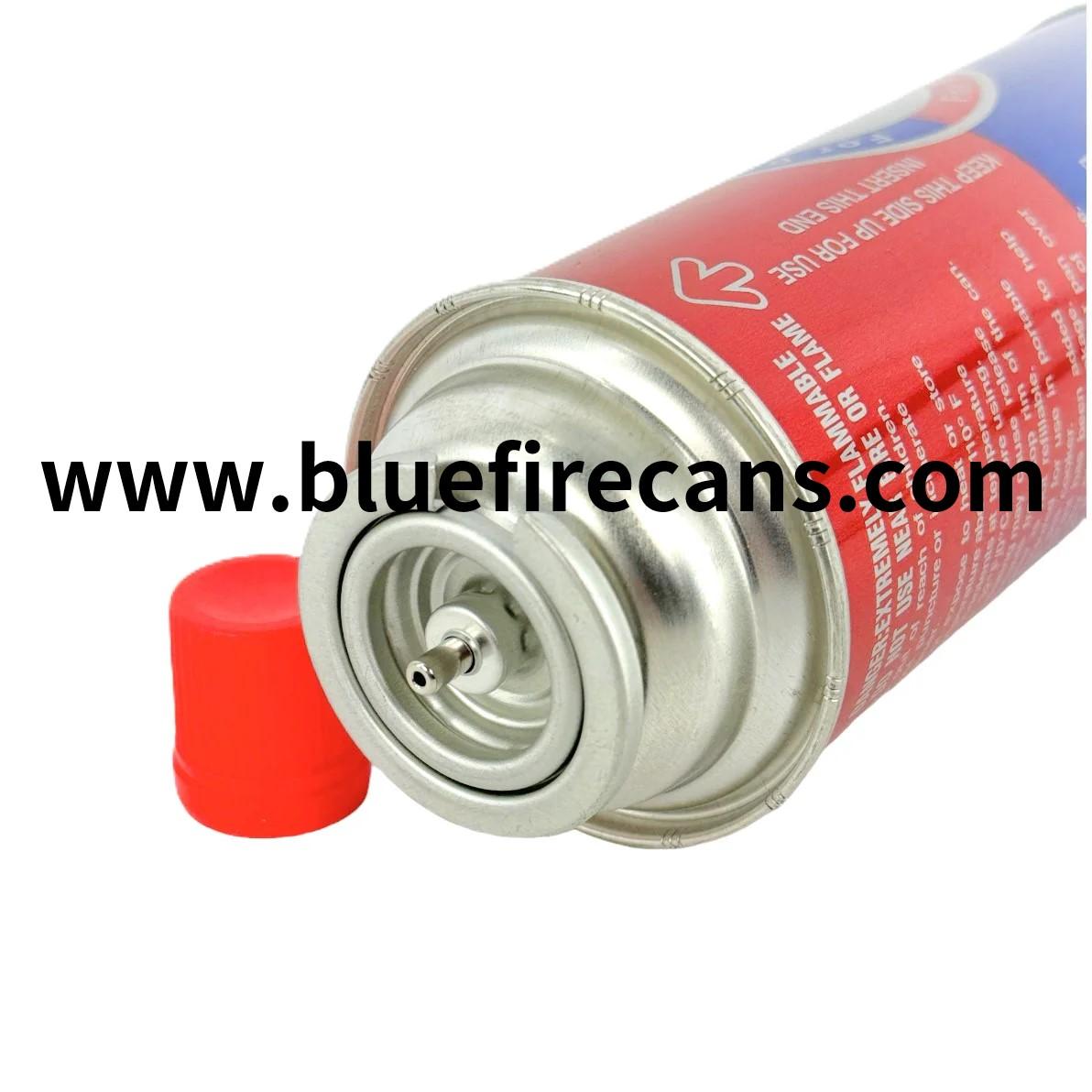
There is a particular kind of frustration that arrives at high altitude on a cold morning when the stove refuses to cooperate. The valve turns, the igniter clicks, and what comes out is barely worth calling a flame. Nothing is visibly wrong. No damage, no leak, no obvious explanation. And yet the Bluefire Butane Gas Canister in your hand is delivering almost nothing, despite feeling reassuringly heavy.
Butane lives inside the canister as a pressurised liquid. The journey from liquid to usable flame requires vaporisation, a phase change that depends on ambient warmth to happen at a useful rate. Mild temperatures make this invisible and effortless. Cold temperatures slow it to a crawl. There is a point where the liquid simply cannot convert fast enough to sustain a decent flame, and the stove reflects this immediately. The canister is full. The chemistry just needs warmth it is not getting.
What makes this genuinely tricky is how situational it is. The same canister, the same stove, the same hands on the valve can produce completely different results depending on when and where the cooking happens. A trip to the mountains in autumn, a pre-dawn start after a cold night at camp, a cook in early spring when the ground is still half-frozen — these conditions change the performance picture entirely. Experienced outdoor cooks tend to learn this the hard way, usually through a lukewarm breakfast that should have been hot.
Heat, though, is where things can get more serious. A canister warming in direct sun or sitting too close to a heat source builds internal pressure as the fuel warms. The canister handles a normal range without trouble, but pressure has limits, and past a certain point safety mechanisms engage in ways that are unpleasant to deal with. Leaving a pressurised canister sealed inside a hot car is not a dramatic edge case. It happens, and it matters.
Practical solutions exist and most of them are refreshingly low-tech. Sleeping with a canister inside a bag, tucking it into a jacket before use, wrapping both hands around it while cooking — all of these work because they do the one thing that actually helps: they raise the fuel temperature enough for vaporisation to happen properly. Insulating sleeves have become a standard piece of kit for people who cook outdoors in cold climates, and it is easy to see why. The physics are simple; the sleeve just keeps the warmth where it is needed.
Blended fuels take a more permanent approach to the problem. Mixing isobutane or propane into the formulation lowers the temperature at which the blend vaporises, extending reliable performance into colder conditions. For anyone heading into winter terrain or cooking regularly at elevation, the performance difference justifies the extra cost without much debate. Pure butane has its place, but blended fuels handle weather variation more gracefully.
Storage habits matter too, in a quiet way. A canister that spent winter in a cold garage is not ruined, but connecting it straight to a stove on a freezing morning and expecting full output is optimistic. Giving it time to warm up before use, even just bringing it inside for ten minutes, removes a variable that does not need to be there.
None of this is the Butane Gas Canister misbehaving. It is responding to conditions exactly as the physics predicts. The frustration usually comes from expecting it to ignore temperature entirely, which it simply cannot do. Adjust the expectation, manage the temperature, and the performance tends to follow. Bluefire offers a fuel canister range designed with real-world use in mind. Browse the full lineup at https://www.bluefirecans.com/product/ .

 English
 French
 Spanish
 Portuguese
 Deutsch
 Turkish
 Dutch
 Italiano
 Russian
 Romaian
 Portuguese (Brazil)
 Greek