
Fiber Selection and Weaving Techniques in Oxford Fabric
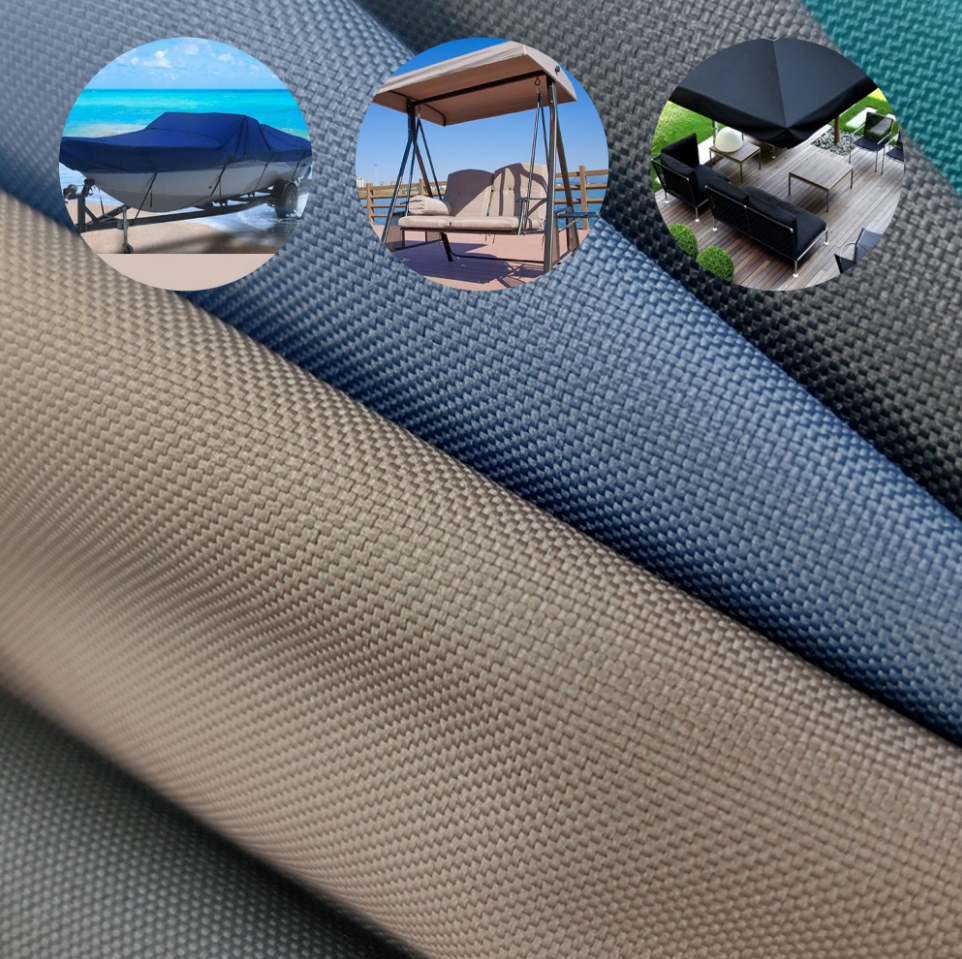
The production of Oxford Fabric involves a sequence of controlled textile engineering processes that define its final mechanical and aesthetic properties.
The process begins with fiber selection. Most industrial Oxford fabrics are made from polyester or nylon due to their strength, cost efficiency, and compatibility with finishing treatments. Polyester provides dimensional stability and resistance to UV degradation, while nylon offers higher tensile strength and flexibility.
After fiber selection, yarn spinning determines denier level. Denier refers to the mass of yarn per unit length and directly influences fabric weight and durability. For example, 150D yarn produces lightweight fabrics suitable for lining or temporary covers, while 600D or 1000D yarns are used for structural applications requiring higher strength.
Weaving is the next critical stage. Oxford fabric typically uses a basket weave pattern, where multiple yarns are grouped in the warp and/or weft direction. This method increases fabric thickness and enhances structural stability. The weaving density can vary significantly depending on end-use requirements.
Once woven, the greige fabric undergoes finishing processes. These may include dyeing, calendaring (surface smoothing), and coating. PU coating is commonly applied to improve water resistance, while PVC coating enhances durability for industrial-grade applications. TPU lamination is used when both waterproofing and flexibility are required.
Quality control is essential throughout production. Parameters such as GSM, tensile strength, tear resistance, and coating adhesion are tested to ensure consistency across production batches.
In modern textile manufacturing, Oxford Fabric is considered a flexible base material platform rather than a fixed specification product. Manufacturers adjust fiber composition, weave density, and finishing layers to achieve different performance grades for various industries.
This adaptability is what makes Oxford fabric a widely used solution in sectors such as luggage production, outdoor equipment manufacturing, automotive covers, and storage systems.

 English
 Arabic
 French
 Spanish
 Portuguese
 Deutsch
 Turkish
 Dutch
Dutch
 Italiano
 Romaian
 Portuguese (Brazil)
 Greek
Greek