
Improving Adhesion Performance of PVC Foil Systems
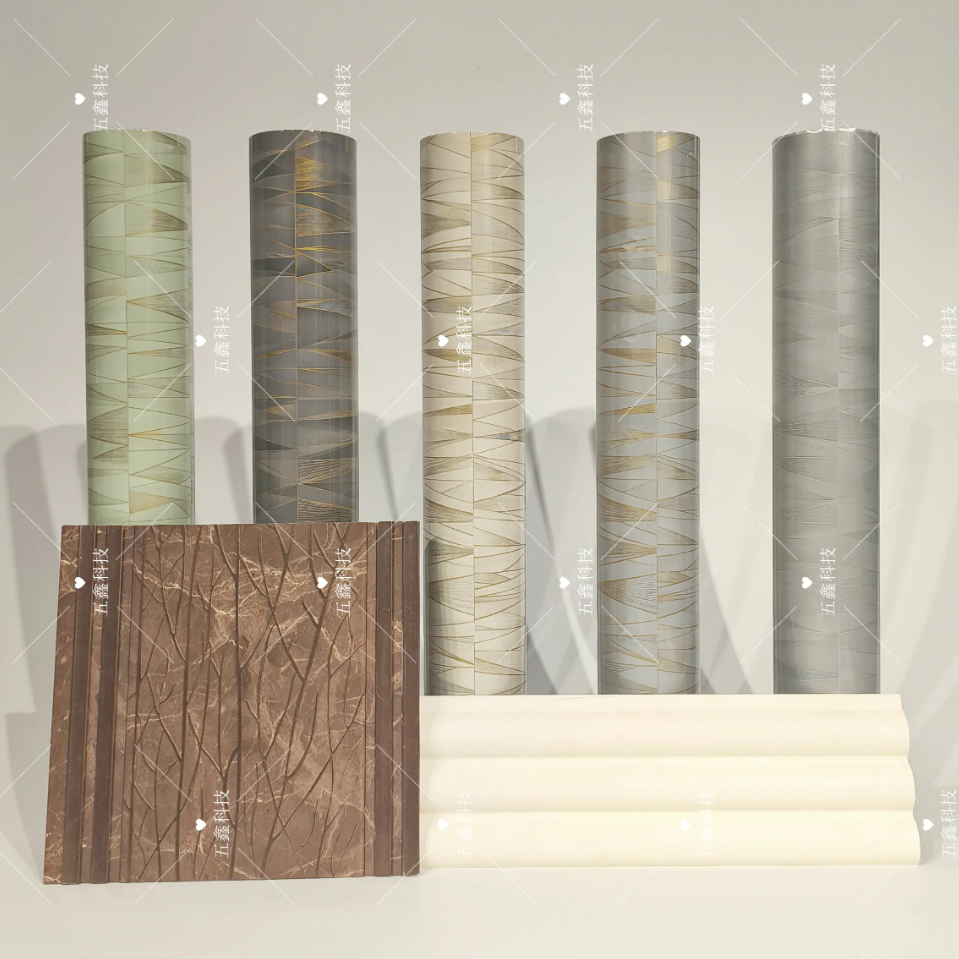
The performance of PVC Hot Stamping Foil depends largely on the precise control of process parameters during application. Temperature, pressure, and dwell time must be carefully balanced to achieve consistent transfer quality across different substrates.
Temperature is one of the most critical variables. For PVC-based substrates, typical stamping temperatures range from 90°C to 140°C. Lower temperatures may result in incomplete adhesive activation, while excessive heat above 150°C can cause deformation of the substrate or degradation of the decorative layer.
Pressure also plays a significant role in ensuring uniform contact between the foil and the substrate. Industrial stamping systems generally operate within a pressure range of 0.3–0.8 MPa depending on surface texture. Higher pressure is required for rough or embossed surfaces, while smooth surfaces require less force to achieve full coverage.
Dwell time refers to the duration that heat and pressure are applied. In most production environments, dwell times range from 0.5 to 3 seconds. Short dwell times improve production speed but require precise temperature control, while longer dwell times improve adhesion on complex or uneven surfaces.
PVC hot stamping foil also requires stable substrate preparation. Contaminants such as dust, oil, or release agents can significantly reduce bonding strength. Surface cleaning or light abrasion is often used to improve adhesion efficiency.
Another important factor is foil tension control during feeding. Uneven tension can cause wrinkles, misalignment, or partial transfer defects. Modern systems use automated tension control mechanisms to maintain consistency across long production runs.
Environmental conditions such as humidity and ambient temperature can also influence results. High humidity may affect adhesive performance, while low temperatures can reduce flexibility during transfer.
By optimizing these parameters, manufacturers can achieve high transfer efficiency, improved color consistency, and long-term durability. This is particularly important in high-volume production environments where even small variations can lead to significant quality differences.

 English
 Arabic
 French
 Spanish
 Portuguese
 Deutsch
 Dutch
Dutch
 Italiano
 Russian
 Romaian
 Portuguese (Brazil)
 Greek
Greek