
Performance Limits in High-Speed Rotating Systems
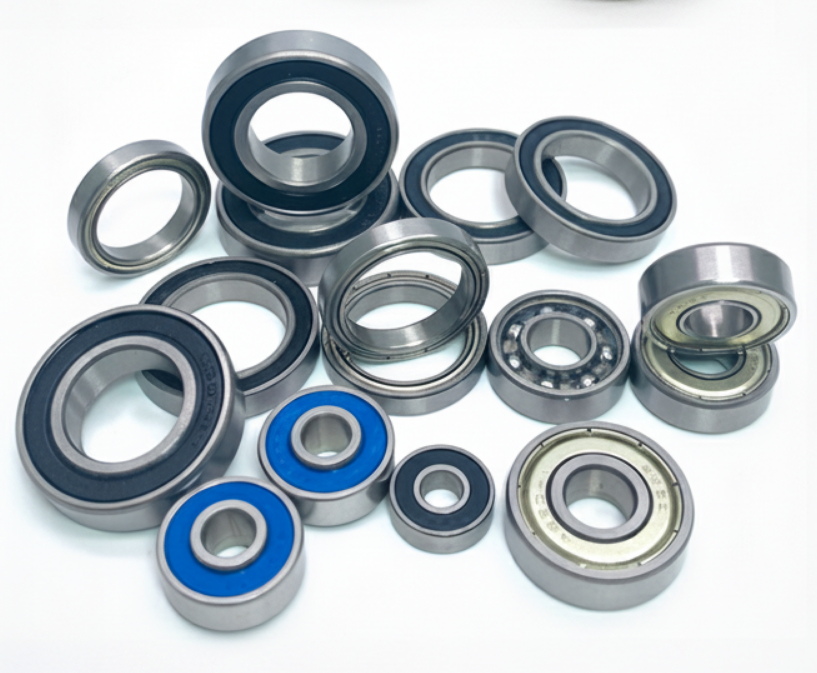
Rotating machinery relies heavily on components that can maintain stability under combined radial and axial forces. Deep Groove Ball Bearings are designed specifically to handle such conditions while maintaining smooth operation.
These bearings primarily support radial loads but can also accommodate moderate axial loads in both directions. The load distribution occurs through point contact between the balls and raceways, which reduces friction compared to line-contact systems like roller bearings.
A typical single-row deep groove bearing can handle dynamic load ratings ranging from 5 kN to over 60 kN depending on size series. Static load ratings are usually 30–60% higher, providing safety margins during shock or low-speed conditions.
Speed capability is another key advantage. Due to low rolling resistance, many designs can operate efficiently at rotational speeds exceeding 15,000 RPM in smaller sizes. The limiting speed depends on lubrication type, cage material, and sealing configuration.
For high-speed systems, internal clearance grades such as C3 or C4 are often selected to compensate for thermal expansion during operation. This prevents excessive preload and reduces heat generation.
Industries such as electric motors, robotics, HVAC systems, and industrial pumps rely on these performance characteristics to ensure continuous operation with minimal maintenance requirements.
 Romaian
 English
 Arabic
 French
 Spanish
 Portuguese
 Deutsch
 Turkish
 Dutch
Dutch
 Italiano
 Russian
 Portuguese (Brazil)
 Greek
Greek