
Agricultural Waste Finds New Value in Packaging
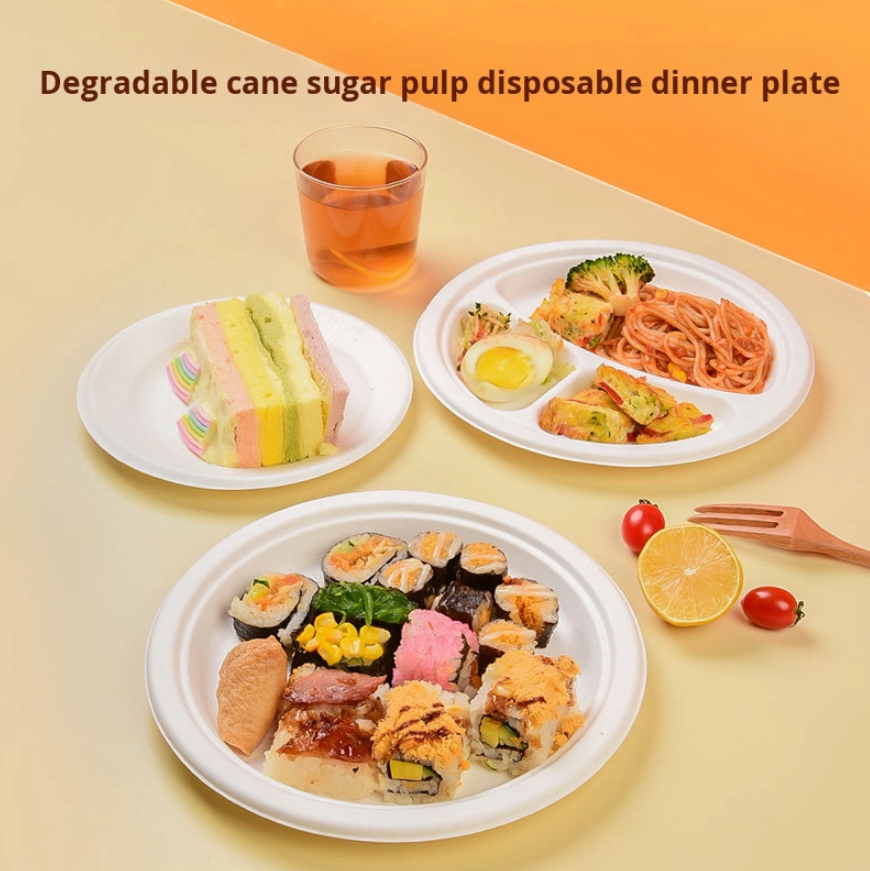
Packaging manufacturers are increasingly searching for materials that reduce environmental impact while maintaining commercial practicality. One material receiving strong attention is bagasse, a byproduct generated during sugarcane processing. Instead of being treated as agricultural waste, this fibrous residue is now widely converted into disposable food containers and molded fiber tableware. As plastic reduction policies continue spreading globally, bagasse food packaging has become an important part of sustainable packaging discussions.
The concept behind bagasse packaging supports circular resource utilization. Sugarcane stalks are harvested primarily for sugar production. After juice extraction, the remaining fibers are collected and processed into pulp. This secondary use reduces waste while creating an additional value stream for agricultural industries. Compared with petroleum-based plastics, the raw material source is renewable and naturally replenished through seasonal farming cycles.
Environmental regulations are helping accelerate market demand. Several regions have introduced restrictions on expanded polystyrene and certain single-use plastic products. Food service operators are therefore seeking packaging alternatives capable of meeting compliance requirements while still supporting high-volume takeaway operations. Industry analysis indicates that bagasse-based products account for a significant share of the growing sugarcane packaging market.
Compostability is one of the material’s primary advantages. Under industrial composting conditions, sugarcane pulp products can degrade within approximately 60 to 90 days. During decomposition, the material breaks down into organic matter rather than persistent microplastic fragments.
Another reason for growing adoption is production scalability. Countries with strong sugarcane industries generate large quantities of bagasse annually, creating stable raw material availability. This supply chain advantage supports industrial-scale manufacturing for export markets and large food service chains.
Performance characteristics have also improved. Early generations of molded pulp packaging sometimes struggled with water resistance and structural consistency. Modern production systems now use refined fiber pulping, multi-stage drying, and high-pressure thermoforming to improve strength and appearance. Some containers can support loads exceeding 1 kilogram while maintaining shape during transportation.
Food safety standards remain an important consideration in packaging development. Many manufacturers produce molded fiber products designed to comply with food-contact regulations. Increasing attention is also being placed on PFAS-free manufacturing processes and cleaner additive systems.
Consumer behavior is another factor supporting industry growth. Many customers now prefer takeaway packaging that appears environmentally responsible and plant-based. Natural fiber textures and neutral colors contribute to this perception. Restaurants often use compostable containers to strengthen brand identity and communicate sustainability initiatives.
Technological innovation continues across the sector. Research into biodegradable coatings, antimicrobial fiber treatments, and moisture barrier improvements may further expand the applications of molded fiber packaging in the coming years. Academic studies on biodegradable food packaging films also highlight the growing interest in sustainable material engineering.
The transition away from conventional plastics will likely involve multiple packaging materials rather than a single universal solution. However, sugarcane fiber packaging has already established itself as one of the more commercially viable options for disposable food service applications. Its combination of renewable sourcing, compostability, and functional performance continues attracting attention from restaurants, retailers, and packaging distributors worldwide.
 Portuguese
 English
 Arabic
 French
 Spanish
 Deutsch
 Turkish
 Dutch
Dutch
 Italiano
 Russian
 Romaian
 Portuguese (Brazil)
 Greek
Greek