
Production Challenges in Plastic Bumper Manufacturing
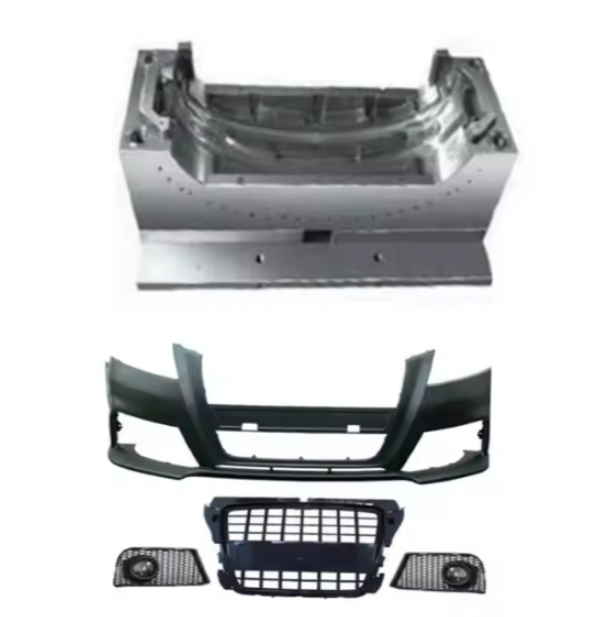
Automotive manufacturing relies heavily on high-volume plastic molding technologies, especially for exterior components. The Car Bumper is one of the largest injection molded parts used in passenger vehicles today. Producing these components requires precise engineering, stable processing conditions, and durable tooling systems capable of operating continuously under demanding industrial conditions.
Injection molding begins with plastic pellets such as polypropylene or ABS blends. Before processing, the material is dried carefully to control moisture content. Excess moisture can create bubbles, weak points, or visible surface defects during molding. Automated feeding systems then transport the material into large injection molding machines equipped with high-capacity screws and heating barrels.
Inside the machine, the material is heated to temperatures typically ranging from 180°C to 280°C. The molten polymer is then injected into a precision mold cavity under high pressure, sometimes exceeding 1500 bar. Large automotive bumper molds often require clamping forces above 5000 tons to maintain dimensional stability during the injection cycle.
Mold design is one of the critical factors influencing bumper quality. Engineers carefully position gates, runners, cooling channels, and venting systems to ensure balanced material flow. Uneven flow may create weld lines, sink marks, or warpage across the bumper surface. Surface appearance is especially important because front and rear bumpers remain highly visible after painting and assembly.
Cooling systems also play a significant role in production efficiency. Cooling may account for nearly 60–70% of the total molding cycle. Advanced conformal cooling channels can improve temperature distribution inside the mold and reduce deformation after ejection. Some research projects have reported substantial reductions in cycle time and residual stress through optimized cooling layouts.
Automation has become increasingly common throughout bumper production lines. Robotic systems remove molded parts, transport them to trimming stations, and prepare them for painting. Automated inspection equipment can identify dimensional deviations, short shots, flow marks, or surface defects before assembly. Machine learning systems are also being explored for quality classification and real-time process optimization in injection molding operations.
Painting is another important stage. Bumpers usually receive primer, base coat, and clear coat layers under controlled temperature and humidity conditions. Metallic and pearlescent finishes require especially careful paint application to maintain color consistency with adjacent body panels.
Manufacturers continuously search for methods to improve productivity while reducing energy consumption and material waste. Lightweight materials, faster molding cycles, and intelligent process monitoring systems all contribute to lower production costs and improved sustainability. As electric vehicle production expands globally, bumper manufacturing technology is expected to continue evolving toward lighter, stronger, and more integrated component designs.
 Portuguese
 English
 Arabic
 French
 Spanish
 Deutsch
 Turkish
 Dutch
Dutch
 Italiano
 Russian
 Romaian
 Portuguese (Brazil)
 Greek
Greek