
How to Start an E-Waste Recycling Plant in India
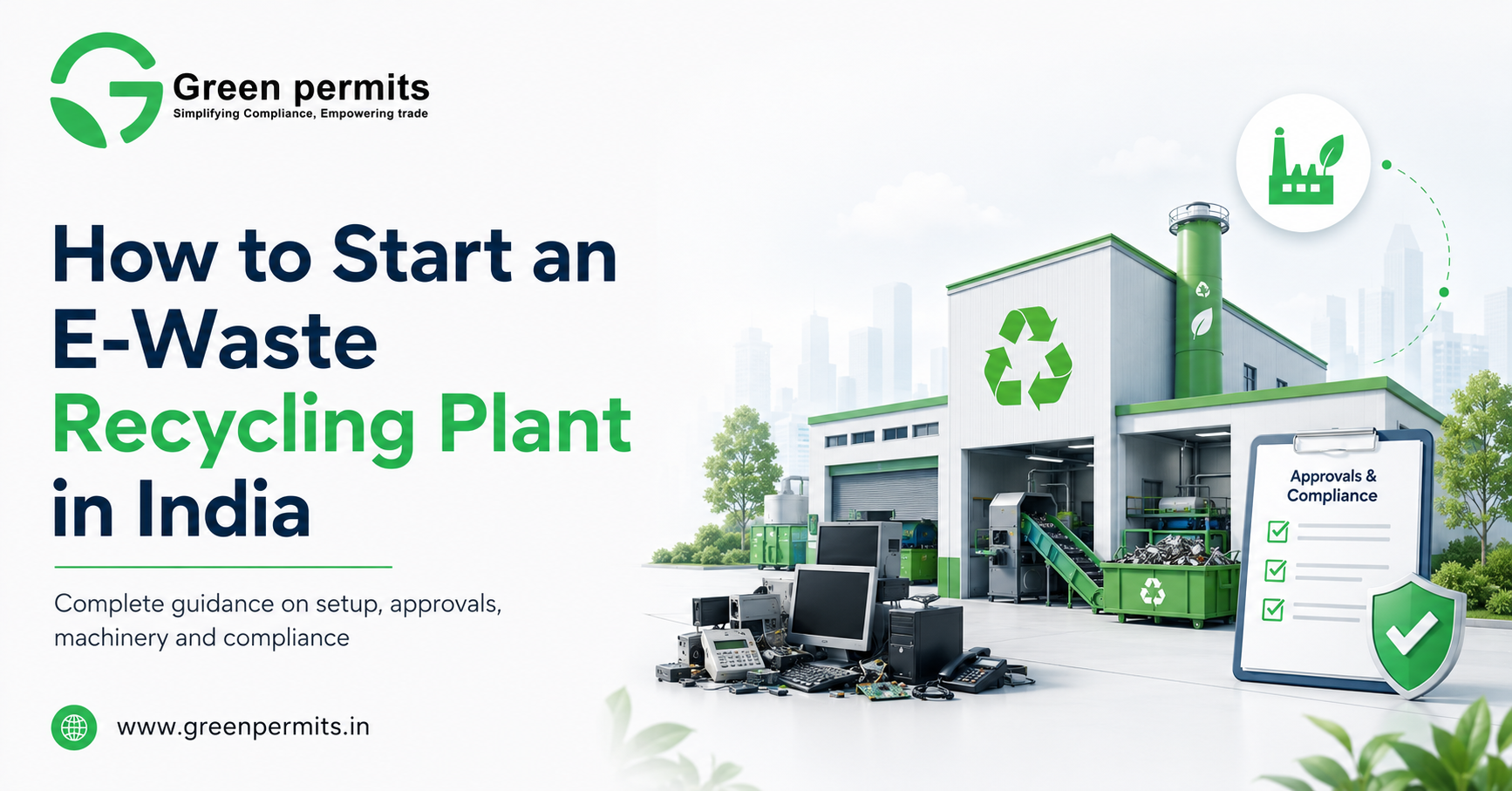
India is one of the fastest-growing consumers of electronic products in the world. Mobile phones, laptops, computers, televisions, printers, servers, networking devices, home appliances, and industrial electronics are being used on a massive scale. As these products reach the end of their life cycle, they generate electronic waste, commonly known as e-waste.
According to industry estimates, India generates millions of tonnes of e-waste every year, and this volume continues to increase due to rapid technological upgrades and growing digital adoption. This growing waste stream has created significant opportunities for entrepreneurs and investors looking to establish authorized e-waste recycling plants.
An e-waste recycling plant helps recover valuable materials such as copper, aluminum, iron, plastic, gold, silver, and other metals from discarded electronic products while ensuring environmentally safe disposal of hazardous components.
However, setting up an e-waste recycling facility requires careful planning, regulatory approvals, machinery selection, land assessment, and compliance with CPCB guidelines. Understanding the complete process is essential before making an investment.
What is an E-Waste Recycling Plant
An e-waste recycling plant is a facility that collects, dismantles, segregates, processes, and recovers materials from discarded electrical and electronic equipment.
The plant receives electronic waste from producers, bulk consumers, collection centers, refurbishers, dismantlers, and other authorized sources.
The primary objective is to recover valuable resources and prevent environmental pollution caused by improper disposal of electronic waste.
Recovered materials are supplied back to manufacturing industries, helping support India's circular economy.
Why Start an E-Waste Recycling Business
The e-waste recycling industry is growing rapidly because of increasing electronic consumption and stricter environmental regulations.
Several factors make this business attractive:
- Rising e-waste generation
- Strong demand for recycled materials
- Government support for formal recycling
- Growing EPR compliance requirements
- Increasing demand for authorized recyclers
- Circular economy opportunities
- Long-term sustainability potential
As producers and importers are required to meet EPR obligations, authorized recyclers play an important role in the compliance ecosystem.
Business Opportunities in E-Waste Recycling
E-waste recyclers can generate revenue through multiple channels.
These may include:
- Sale of recovered metals
- Sale of recovered plastic
- EPR certificate generation
- Recycling service charges
- Corporate e-waste contracts
- Producer compliance partnerships
- Material recovery operations
With proper planning and technology, an e-waste recycling plant can become a sustainable long-term business.
Step 1: Conduct a Feasibility Study
The first step before establishing an e-waste recycling plant is conducting a detailed feasibility study.
The study evaluates:
- Market demand
- Availability of e-waste
- Competition
- Investment requirement
- Land requirement
- Compliance obligations
- Revenue potential
A feasibility study helps investors understand whether the project is technically and financially viable.
Professional assessment helps reduce project risks.
Step 2: Prepare a Detailed Project Report (DPR)
A Detailed Project Report is one of the most important documents required before project implementation.
The DPR generally includes:
- Project overview
- Plant capacity
- Machinery list
- Land requirement
- Process flow
- Utility requirement
- Compliance approvals
- Cost estimation
- Financial projections
- Profitability analysis
The DPR is useful for bank loans, investor funding, Pollution Control Board approvals, and project planning.
A professionally prepared DPR improves decision-making and project execution.
Step 3: Select Suitable Land
Land selection is a critical factor in project success.
The proposed site should preferably be located in an industrial area approved for recycling activities.
Important considerations include:
- Industrial zoning
- Road connectivity
- Power availability
- Water availability
- Waste transportation access
- Environmental suitability
- Future expansion opportunities
Improper land selection can delay approvals and increase project costs.
The land requirement depends on plant capacity and machinery layout.
Step 4: Obtain Pollution Control Board Approvals
Environmental approvals are mandatory before establishing an e-waste recycling plant.
The major approvals generally include:
- Consent to Establish (CTE)
- Consent to Operate (CTO)
- Hazardous Waste Authorization
- Local authority approvals
The Pollution Control Board evaluates the proposed process, pollution control systems, waste management arrangements, and environmental safeguards.
Without these approvals, the plant cannot operate legally.
Step 5: Apply for E-Waste Recycler Registration
E-waste recycling facilities must obtain registration from the Central Pollution Control Board under the E-Waste Management Rules.
The registration process generally involves:
- Portal registration
- Document submission
- Facility details
- Machinery information
- Process flow details
- Environmental compliance information
The CPCB reviews the application and verifies whether the facility meets regulatory requirements.
Only registered recyclers can legally recycle e-waste and generate EPR certificates.
Step 6: Purchase Machinery and Equipment
Machinery is one of the largest investments in an e-waste recycling project.
The machinery required depends on plant capacity and recycling technology.
Common equipment includes:
- Dismantling tables
- Shredder
- Crusher
- Conveyor system
- Magnetic separator
- Eddy current separator
- Dust collection system
- Air pollution control equipment
- Material handling equipment
- Storage systems
Advanced facilities may also install PCB processing equipment, cable granulators, and metal recovery systems.
Machinery should be selected based on technical requirements and compliance obligations.
Step 7: Install Pollution Control Systems
Pollution control systems are mandatory for authorized e-waste recycling facilities.
Depending on the process, the plant may require:
- Dust extraction systems
- Bag filters
- Scrubbers
- Ventilation systems
- Hazardous waste storage areas
- Wastewater treatment systems
The Pollution Control Board evaluates these systems during approval and inspection stages.
Proper environmental planning is critical for long-term compliance.
Step 8: Recruit Skilled Manpower
An e-waste recycling facility requires trained personnel for dismantling, segregation, machine operation, environmental management, and compliance activities.
The workforce may include:
- Plant operators
- Dismantling technicians
- Safety officers
- Compliance personnel
- Supervisors
- Material handling staff
Training employees in safety and waste management practices helps improve operational efficiency.
Step 9: Establish Collection and Supply Channels
The success of an e-waste recycling plant depends on regular access to waste materials.
Recyclers generally obtain e-waste from:
- Producers
- Importers
- Bulk consumers
- Collection centers
- Refurbishers
- Corporates
- Government organizations
Building strong supply partnerships helps ensure consistent plant utilization.
Long-term agreements can improve business stability.
Cost of Starting an E-Waste Recycling Plant in India
The investment required depends on plant capacity, technology, machinery, and location.
A small dismantling and recycling facility may require a lower investment, while a fully integrated recycling plant with advanced recovery technology requires significantly higher capital.
Major cost components include:
- Land and building
- Machinery and installation
- Pollution control systems
- Licensing and approvals
- Working capital
- Utility infrastructure
- Labor costs
A detailed DPR helps estimate the exact project cost before investment.
Timeline for E-Waste Recycling Plant Setup
The project timeline depends on land availability, approvals, machinery procurement, and construction activities.
The process generally includes:
- Feasibility study
- DPR preparation
- Land acquisition
- Approval process
- Machinery procurement
- Installation
- Trial operation
- Registration approval
Projects with proper planning usually progress more smoothly than those started without compliance preparation.
Common Challenges Faced by New Recyclers
Many entrepreneurs face delays because they underestimate regulatory and technical requirements.
Common challenges include:
- Improper land selection
- Weak project planning
- Incomplete DPR
- Delays in approvals
- Incorrect machinery selection
- Lack of raw material supply agreements
- Poor compliance management
Professional guidance can help avoid these issues.
Benefits of Professional Plant Setup Consulting
Setting up an e-waste recycling plant involves technical, environmental, financial, and regulatory considerations.
A professional consultant can assist with:
- Feasibility study
- DPR preparation
- Land assessment
- CPCB registration
- Pollution Control Board approvals
- Machinery planning
- Compliance management
- Project execution support
Expert support helps investors save time and reduce project risks.
Learn the Complete E-Waste Recycling Plant Setup Process
Planning to start an e-waste recycling plant in India? Understanding project cost, machinery requirement, CPCB registration, Pollution Control Board approvals, DPR preparation, and compliance obligations is essential before investing.
Read the complete guide here:
👉 https://www.greenpermits.in/03/e-waste-recycling-plant-setup-in-india-2026-cpcb-guide/
📞 Get Expert Assistance for E-Waste Recycling Plant Setup
Need assistance with E-Waste Recycler Registration, DPR preparation, machinery planning, Pollution Control Board approvals, feasibility studies, plant layout design, or complete project setup support? The experts at Green Permits Consulting can guide you throughout the complete process.
🌐 Website: https://www.greenpermits.in/
📞 Phone: +91 78350 06182
📧 Email: wecare@greenpermits.in

 English
 Arabic
 Spanish
 Portuguese
 Deutsch
 Turkish
 Dutch
Dutch
 Italiano
 Russian
 Romaian
 Portuguese (Brazil)
 Greek
Greek