
In-Plant Logistics Industry Outlook and Growth Prospects Through 2034
The in-plant logistics market is experiencing strong growth as manufacturers increasingly focus on improving operational efficiency, reducing production downtime, and optimizing material movement within industrial facilities. In-plant logistics refers to the management of internal transportation, storage, inventory handling, and material flow processes within manufacturing plants and warehouses. As industries embrace automation and digital transformation, the demand for advanced in-plant logistics solutions continues to rise across sectors such as automotive, electronics, food and beverage, pharmaceuticals, and industrial manufacturing.
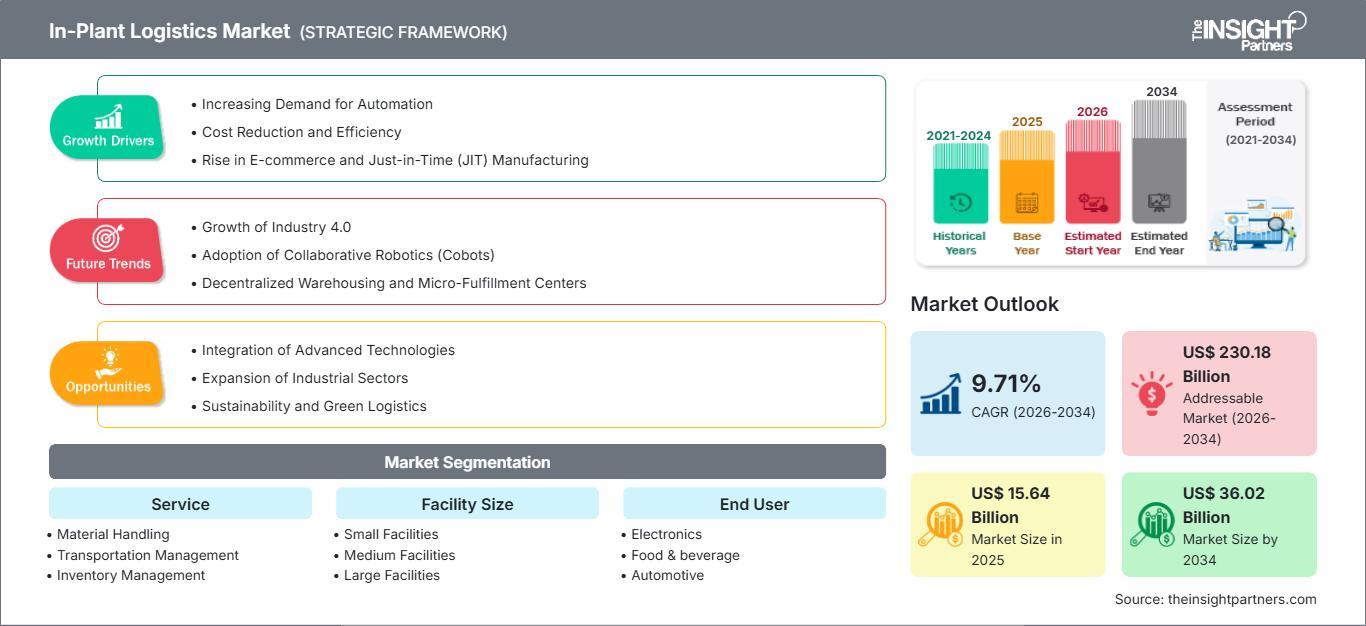
According to market estimates, the In-Plant Logistics Market size is expected to reach US$ 36.02 billion by 2034 from US$ 15.64 billion in 2025. The market is estimated to record a CAGR of 9.71% from 2026 to 2034. Growing industrial automation, increasing adoption of smart manufacturing practices, and the need for efficient material handling systems are among the major factors supporting market expansion during the forecast period.
Download Sample Report – https://www.theinsightpartners.com/Sample/TIPRE00039485
The increasing complexity of manufacturing operations is encouraging companies to invest in intelligent logistics systems that can streamline workflows and improve productivity. Organizations are leveraging technologies such as automated guided vehicles (AGVs), robotics, warehouse management systems, and real-time tracking solutions to enhance material movement and inventory visibility within production facilities.
Key Market Drivers Fueling Growth
Rising Adoption of Industrial Automation
One of the primary growth drivers for the in-plant logistics market is the rapid adoption of industrial automation across manufacturing industries. Manufacturers are under constant pressure to improve efficiency, minimize operational costs, and increase production output. Automated logistics systems help companies achieve these objectives by reducing manual intervention and improving the accuracy of material handling operations.
Automated guided vehicles, autonomous mobile robots, conveyor systems, and robotic material handling solutions are increasingly being deployed within production facilities. These technologies enable seamless transportation of raw materials, components, and finished goods throughout the manufacturing process, leading to improved operational efficiency and reduced labor dependency.
Growth of Smart Manufacturing Initiatives
The emergence of Industry 4.0 and smart factory initiatives is significantly contributing to market growth. Modern manufacturing facilities rely on interconnected systems, data analytics, and real-time monitoring to optimize production processes. In-plant logistics solutions play a critical role in supporting these smart manufacturing environments by ensuring efficient movement of materials and maintaining uninterrupted production flows.
Integration of Internet of Things (IoT) sensors, artificial intelligence, and advanced analytics enables manufacturers to gain greater visibility into logistics operations. Real-time data helps identify bottlenecks, improve inventory management, and enhance overall production planning. As more organizations adopt smart factory technologies, demand for advanced in-plant logistics solutions is expected to increase substantially.
Increasing Need for Operational Efficiency
Manufacturers worldwide are seeking ways to improve productivity while reducing operating costs. Efficient in-plant logistics systems help minimize delays, optimize resource utilization, and enhance workflow coordination. Proper management of internal logistics activities ensures that materials are delivered to the right location at the right time, reducing production interruptions and improving throughput.
The growing emphasis on lean manufacturing principles is also supporting market growth. Companies are implementing logistics solutions that reduce waste, eliminate unnecessary movements, and improve process efficiency. These benefits make in-plant logistics a strategic investment for organizations aiming to maintain competitiveness in rapidly evolving markets.
Expansion of the Automotive Manufacturing Sector
The automotive industry remains one of the largest adopters of in-plant logistics solutions. Vehicle manufacturers require sophisticated logistics systems to manage thousands of components and ensure smooth assembly line operations. As automotive production continues to grow globally, the need for advanced material handling and inventory management solutions is increasing.
The transition toward electric vehicle manufacturing is creating additional opportunities for in-plant logistics providers. Electric vehicle production facilities require highly coordinated logistics operations to manage battery components, electronic systems, and specialized manufacturing equipment. This trend is expected to drive sustained demand for innovative logistics solutions throughout the forecast period.
Rising Demand for Warehouse Optimization
Warehouse efficiency has become a major priority for manufacturers and industrial operators. In-plant logistics solutions help organizations optimize storage utilization, improve inventory accuracy, and accelerate material movement within facilities. Advanced warehouse management systems provide real-time visibility into inventory levels and support efficient order fulfillment processes.
The increasing adoption of digital warehouse technologies, including automated storage and retrieval systems, barcode tracking, and RFID solutions, is further driving market growth. These technologies enhance operational transparency and enable better decision-making across logistics operations.
Growing Focus on Workplace Safety
Safety remains a critical consideration in industrial environments. Automated logistics systems help reduce workplace accidents by minimizing manual material handling activities and reducing human exposure to hazardous conditions. Smart logistics technologies also improve operational control and provide safer transportation of heavy materials within production facilities.
As regulatory requirements related to workplace safety continue to evolve, organizations are investing in advanced logistics solutions that support compliance while improving operational performance.
Regional Market Outlook
North America and Europe continue to represent significant markets for in-plant logistics solutions due to high levels of industrial automation and advanced manufacturing capabilities. Meanwhile, Asia Pacific is expected to witness substantial growth during the forecast period. Rapid industrialization, expanding manufacturing activities, and increasing investments in smart factories across countries such as China, India, Japan, and South Korea are creating strong growth opportunities for market participants.
The region's growing automotive, electronics, and consumer goods industries are further supporting demand for efficient in-plant logistics systems.
Leading Companies in the In-Plant Logistics Market
Key players operating in the global in-plant logistics market include:
- DHL Supply Chain
- KION Group AG
- Toyota Industries Corporation
- Daifuku Co., Ltd.
- SSI SCHAEFER Group
- Jungheinrich AG
- Dematic
- Körber AG
- CEVA Logistics
- XPO Logistics
These companies are focusing on automation technologies, strategic partnerships, digital logistics platforms, and innovative material handling solutions to strengthen their competitive positions and meet evolving customer requirements.
Conclusion
The in-plant logistics market is poised for substantial growth through 2034, driven by increasing industrial automation, smart manufacturing adoption, warehouse optimization initiatives, and the need for greater operational efficiency. With the market expected to grow from US$ 15.64 billion in 2025 to US$ 36.02 billion by 2034 at a CAGR of 9.71%, organizations are expected to continue investing in advanced logistics technologies that improve productivity, reduce costs, and support digital transformation goals. As manufacturing environments become increasingly connected and automated, in-plant logistics will remain a critical component of modern industrial operations.
Contact Us:
Email: sales@theinsightpartners.com
Phone: +1-646-491-9876
Also Available in :
 Romaian
 English
 Arabic
 French
 Spanish
 Portuguese
 Deutsch
 Turkish
 Dutch
 Italiano
 Russian
 Portuguese (Brazil)
 Greek