
Is Chronic Ear Discharge Dangerous? Signs You Should Not Ignore
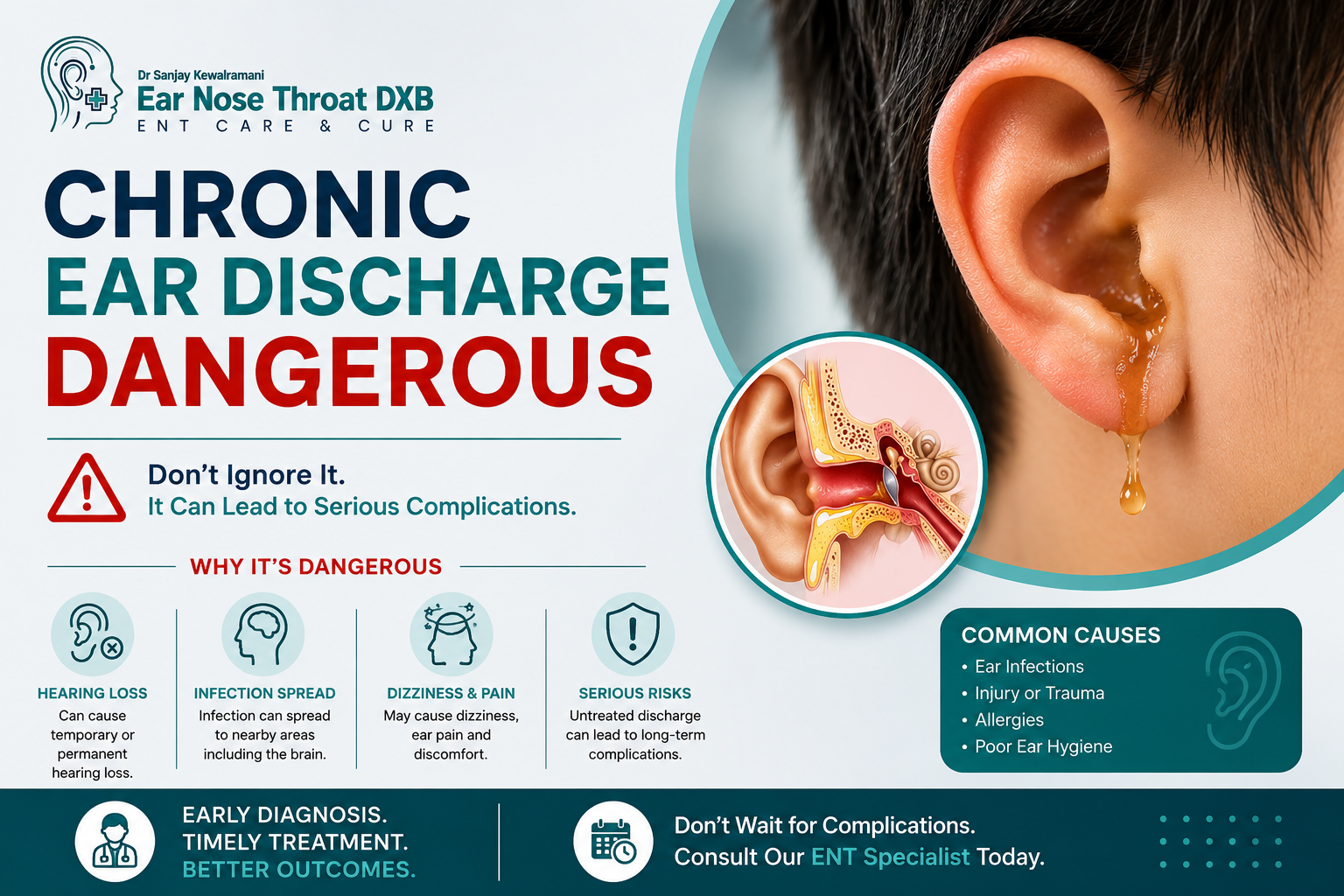
Ear discharge can occur during an infection or inflammation, but when it continues for a long time or repeatedly returns, it should not be ignored. Medically known as otorrhea, ear discharge may come from the outer ear canal or from the middle ear through an opening in the eardrum.
Chronic ear discharge is not always dangerous, but persistent drainage can sometimes indicate an underlying problem that requires medical attention. Chronic middle ear infection, a perforated eardrum, inflammation of the ear canal, and cholesteatoma are some possible causes.
The symptoms occurring alongside the discharge are particularly important. Hearing loss, foul-smelling drainage, severe pain, dizziness, swelling, or facial weakness should be taken seriously.
Why Does Chronic Ear Discharge Happen?
Ear discharge is a symptom rather than a disease itself. Finding its source is therefore important before deciding on treatment.
A chronic middle ear infection can cause repeated drainage, particularly when an opening is present in the eardrum. Fluid from the middle ear can then pass through the opening into the ear canal.
An outer ear infection, also known as otitis externa, may cause discharge together with itching, pain, redness, or swelling.
A perforated eardrum can also contribute to repeated episodes of drainage, especially if water or bacteria enter the middle ear.
Another important possible cause is cholesteatoma, a condition that can gradually affect structures inside the ear.
Signs You Should Not Ignore
Not every episode of ear discharge indicates a serious condition. However, certain symptoms deserve closer attention.
1. Discharge That Keeps Returning
Repeated discharge from the same ear may indicate that an underlying problem has not resolved.
The drainage might temporarily improve after treatment and then return. This pattern can occur with chronic middle ear disease, persistent eardrum perforation, or other conditions.
Instead of repeatedly treating each episode, an ENT examination can help identify why the discharge keeps coming back.
2. Foul-Smelling Ear Discharge
An unpleasant smell can occur with infection, but persistent foul-smelling discharge should be evaluated.
It can sometimes be associated with chronic middle ear disease, including cholesteatoma.
The smell alone cannot identify the cause, which is why examination of the ear canal and eardrum is important.
3. Hearing Loss
Chronic ear problems can sometimes affect hearing.
You may notice muffled sounds, difficulty understanding conversations, or reduced hearing in one ear.
An eardrum perforation, persistent middle ear inflammation, or damage to structures involved in sound transmission may contribute to hearing changes.
When hearing loss occurs alongside recurring discharge, a hearing assessment may be recommended.
4. Severe or Increasing Ear Pain
Some chronic ear conditions can cause drainage without significant pain. However, severe or rapidly worsening pain deserves medical attention.
Pain accompanied by fever, swelling, or feeling significantly unwell may suggest active infection or another problem requiring prompt assessment.
5. Blood-Stained Discharge
Minor bleeding can occur if the delicate skin inside the ear canal becomes irritated or injured.
However, unexplained or repeated blood-stained discharge should be checked.
Avoid inserting cotton buds, pins, or other objects into the ear because they can cause additional injury.
6. Dizziness or Balance Problems
The ear plays an important role in both hearing and balance.
Dizziness can have many causes, but new or significant dizziness occurring with chronic ear discharge should be mentioned to an ENT specialist.
The combination of symptoms may influence what examinations or investigations are needed.
7. Swelling Behind the Ear
Redness, tenderness, or swelling behind the ear, particularly when accompanied by fever or significant pain, requires prompt medical evaluation.
Although serious complications are uncommon, infections can occasionally spread beyond their original location.
8. Facial Weakness
New weakness or reduced movement on one side of the face is an important warning sign.
The facial nerve travels close to structures within the middle ear. Facial weakness occurring with ear infection or chronic discharge requires urgent medical assessment.
Could Chronic Ear Discharge Be Related to Cholesteatoma?
One condition doctors consider when investigating persistent or recurring discharge is cholesteatoma.
A cholesteatoma is an abnormal collection of skin cells and debris that develops within the middle ear or nearby spaces. It is not cancer, but it can gradually enlarge and damage surrounding structures.
Possible symptoms can include:
- Persistent or recurring discharge
- Unpleasant-smelling drainage
- Progressive hearing loss
- Ear fullness
- Tinnitus
- Dizziness in some cases
These symptoms can also occur with other ear conditions, so they do not confirm cholesteatoma by themselves.
If you experience recurring drainage, you can learn more about the connection between chronic ear discharge and cholesteatoma and why persistent symptoms deserve proper evaluation.
An ENT examination is required to determine whether cholesteatoma or another condition is responsible.
Can Chronic Ear Discharge Affect Hearing?
Yes, depending on the underlying condition.
The discharge itself is not necessarily responsible for hearing loss. Instead, the disease producing the discharge may affect the eardrum or structures within the middle ear.
For example, an eardrum perforation may interfere with normal sound transmission. Chronic middle ear disease can also affect the small bones involved in hearing.
If hearing has changed, your ENT specialist may recommend a hearing test to determine the type and degree of hearing loss.
How Is Chronic Ear Discharge Diagnosed?
Diagnosis usually begins with your medical history and an examination of the ear.
The doctor may ask how long the discharge has been present, whether it repeatedly returns, whether it smells unpleasant, and whether you have pain, hearing loss, tinnitus, or dizziness.
The ear canal and eardrum may be examined using an otoscope or microscope.
Sometimes accumulated discharge or debris needs to be carefully removed to allow a clearer examination.
A hearing test may be recommended if hearing loss is suspected. Imaging such as a CT scan may be considered in selected cases, particularly when cholesteatoma or complications are suspected.
How Is Chronic Ear Discharge Treated?
Treatment depends on the underlying cause.
Professional Ear Cleaning
Careful cleaning may remove accumulated discharge and debris and allow prescribed medication to reach the affected area more effectively.
Medicated Ear Drops
Certain infections or inflammatory conditions may be treated with prescribed ear drops. The choice of medication can depend on whether the eardrum is intact.
Keeping the Ear Dry
Patients with an active infection or eardrum perforation may be advised to prevent water from entering the affected ear.
Treating an Eardrum Perforation
Some perforations heal naturally. Persistent perforations associated with recurring infections or hearing problems may require additional treatment, including surgical repair in selected cases.
Cholesteatoma Treatment
Cholesteatoma generally requires specialist management. Surgery may be recommended to remove the abnormal tissue and control the disease. Treatment depends on its location, extent, and effect on surrounding structures.
What Should You Avoid?
Do not repeatedly clean deep inside a draining ear using cotton buds or other objects.
Avoid using oils, home remedies, leftover antibiotics, or old ear drops without medical advice. Some medications may not be suitable when the eardrum is perforated.
Proper examination is safer than repeatedly attempting to manage persistent drainage at home.
When Should You Seek Urgent Medical Care?
Seek prompt medical attention if ear discharge occurs with the following:
- Severe or rapidly worsening pain
- High fever
- Swelling behind the ear
- Sudden or significant hearing loss
- Severe dizziness
- New facial weakness
- Significant bleeding
- Severe headache
- Neurological symptoms
- A significant head injury
These symptoms require timely assessment rather than routine home treatment.
Frequently Asked Questions
Is chronic ear discharge always dangerous?
No. However, persistent or recurring discharge should be assessed because several underlying ear conditions can cause it.
Can smelly ear discharge mean cholesteatoma?
Foul-smelling discharge can occur with cholesteatoma, but it can also result from other infections. Examination is necessary for diagnosis.
Can chronic ear discharge cause hearing problems?
Yes. Some conditions responsible for chronic discharge can affect the eardrum or middle ear and lead to reduced hearing.
Does chronic ear discharge always require surgery?
No. Treatment depends on the cause. Some cases can be managed with cleaning and medication, while certain conditions may require surgery.
Do Not Ignore Persistent Ear Drainage
Chronic ear discharge is not always dangerous, but repeated or persistent drainage should not be accepted as normal.
The underlying problem may be an infection, a perforated eardrum, chronic middle ear disease, or cholesteatoma. Foul-smelling discharge, worsening hearing, severe pain, dizziness, swelling behind the ear, bleeding, or facial weakness are particularly important warning signs.
Identifying the cause allows treatment to address the actual ear condition rather than simply stopping the discharge temporarily.
If your ear continues to drain or the problem repeatedly returns, arrange an ENT evaluation. A detailed examination can help identify the cause and determine the appropriate treatment to protect your ear and hearing.

 Arabic
 French
 Spanish
 Portuguese
 Deutsch
 Turkish
 Dutch
Dutch
 Italiano
 Russian
 Romaian
 Portuguese (Brazil)
 Greek
Greek