
Can Dental Crowns Protect a Damaged Tooth?
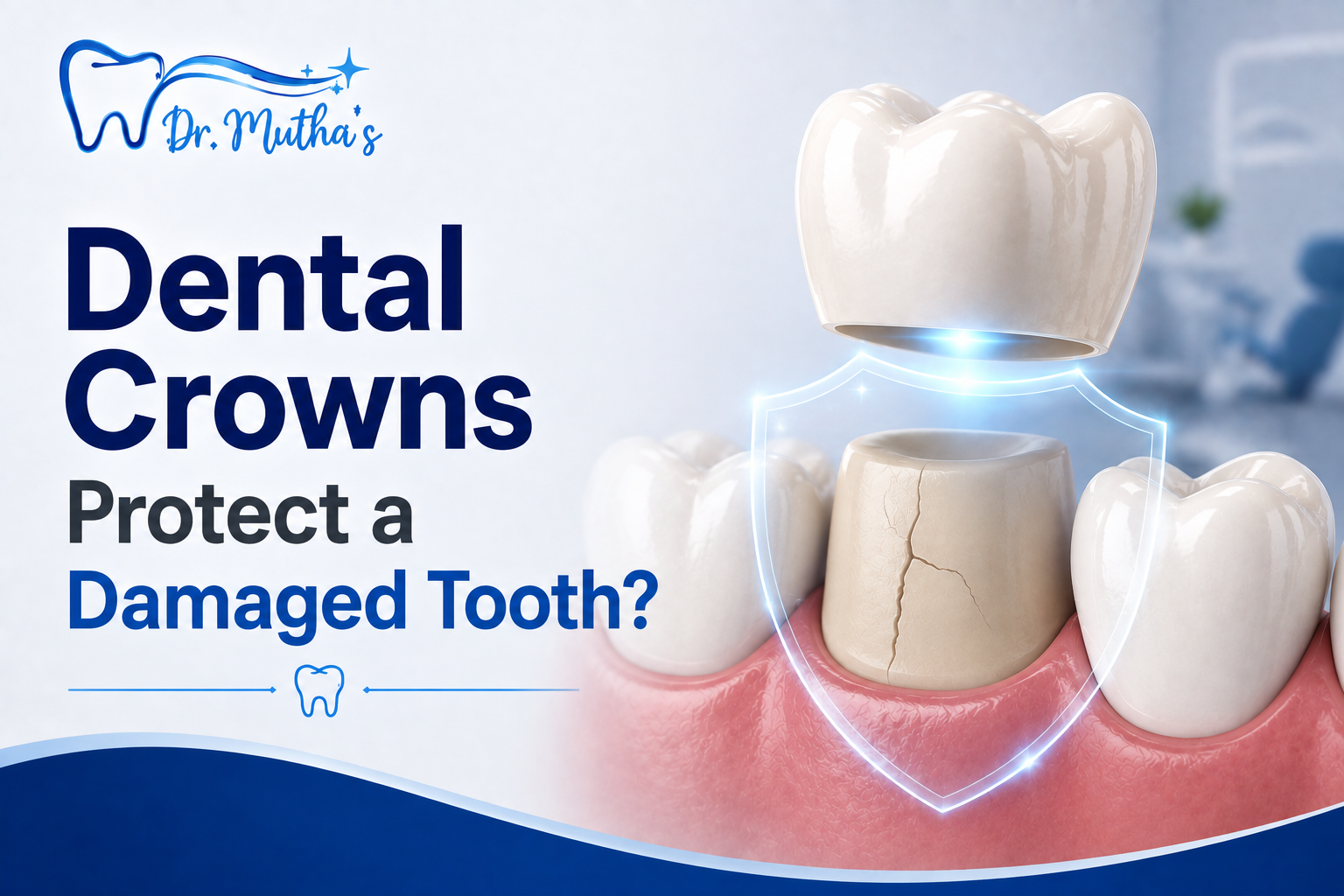
A damaged tooth may still be saved when enough healthy structure remains. Teeth can become weak because of deep decay, cracks, fractures, large fillings, wear, or previous dental treatment. In some cases, a simple filling can repair the affected area. When the remaining tooth needs more coverage and support, a dental crown may be considered.
Patients visiting a dental clinic in Chinchwad for a damaged or weakened tooth can have it examined to understand how much healthy tooth structure remains. Based on the condition of the tooth, the dentist can determine whether a crown, filling, or another restoration is appropriate.
A dental crown does not make a tooth completely resistant to future problems, but it can provide additional protection and help restore the tooth's shape and function.
What Is a Dental Crown?
A dental crown is a custom-made restoration placed over the prepared visible portion of a natural tooth.
Unlike a filling, which repairs a specific damaged area, a crown covers a larger part of the tooth. This makes it useful when the tooth has lost a considerable amount of natural structure.
Dental crowns may be made from materials such as:
- Ceramic
- Porcelain
- Zirconia
- Metal alloys
- Porcelain fused to metal
The choice of material depends on the tooth being treated, its position in the mouth, chewing forces, appearance, and individual treatment needs.
How Does a Dental Crown Protect a Damaged Tooth?
When a tooth becomes weakened, the remaining natural structure may have difficulty handling normal chewing forces.
A dental crown covers the prepared tooth and creates a new outer surface. This helps restore the tooth's shape while providing broader coverage to the remaining structure.
The crown may also help distribute chewing forces across the restored tooth rather than concentrating pressure on a weakened section.
However, the tooth must first be examined to make sure it has enough suitable structure and support for crown treatment.
Can a Crown Protect a Tooth With a Large Cavity?
Small cavities are commonly treated with fillings. When decay becomes extensive, however, removing the affected tooth structure may leave thin or weakened walls behind.
A very large filling may not always provide enough coverage when only a limited amount of strong natural tooth remains.
In these situations, a crown may be considered.
The dentist first removes the decay and evaluates the remaining tooth. If the tooth can be restored, a crown can cover the weakened structure and help restore its function.
A crown itself does not treat active decay, so the underlying dental problem needs to be managed before the final restoration is placed.
Can Dental Crowns Protect Broken Teeth?
A broken tooth does not automatically need a crown.
The appropriate treatment depends on how much tooth has broken and where the fracture is located.
A small chip may sometimes be treated with bonding or a filling. If a larger section of the tooth has broken away, the remaining structure may require greater coverage.
When enough healthy tooth remains, a crown may be used to rebuild the missing shape and protect the weakened portion of the tooth.
A Dentist in Chinchwad can examine the fracture to determine whether the tooth can support a crown or requires another treatment.
Can a Crown Protect a Cracked Tooth?
Certain cracked teeth may benefit from crown treatment.
A crack can develop because of trauma, large fillings, biting hard foods or objects, teeth grinding, or repeated chewing forces.
Possible signs of a cracked tooth can include:
- Pain while biting
- Sensitivity to hot or cold
- Sharp discomfort while chewing
- Pain when releasing biting pressure
- Symptoms that come and go
When the crack affects a restorable portion of the tooth, a crown may be considered to provide broader coverage to the weakened structure.
However, the depth of the crack is important.
If a fracture extends deeply into the root or significantly separates the tooth, placing a crown may not be enough to restore it.
Can a Crown Protect a Tooth With a Large Filling?
Teeth with very large fillings often have less natural structure remaining.
Over time, the surrounding tooth walls may become thinner or develop cracks. An existing filling may also become worn, loose, or damaged.
When this happens, simply replacing the old restoration with an even larger filling may not always be appropriate.
A crown may provide greater coverage by fitting over the prepared remaining tooth.
The dentist considers the condition of the filling, strength of the surrounding tooth, presence of cracks, and amount of healthy structure before recommending treatment.
How Do Crowns Protect Root Canal-Treated Teeth?
A tooth that has undergone root canal treatment may already have lost substantial structure because of decay, fractures, or previous fillings.
This can be especially important for back teeth, which are exposed to considerable chewing pressure.
Depending on the amount of healthy tooth remaining, a crown may be recommended after root canal treatment to provide additional coverage and restore the tooth for function.
However, not every root canal-treated tooth automatically requires a crown.
The dentist considers the tooth's location, remaining structure, existing restorations, cracks, and bite before deciding on the final restoration.
If you want to understand other situations where a crown may be recommended, you can learn when a damaged tooth may need a dental crown and then discuss the condition of your individual tooth with your dentist.
Can a Crown Protect a Severely Worn Tooth?
Teeth can gradually become worn because of grinding, clenching, bite-related factors, or other causes.
Minor wear may not require crown treatment.
When a substantial amount of tooth structure has been lost, however, the tooth's original shape and chewing surface may be affected.
A crown may sometimes be used to rebuild a severely worn tooth when enough suitable structure remains.
The reason for the wear should also be identified. If grinding or clenching continues, excessive forces can affect both natural teeth and dental restorations.
Does a Crown Stop Further Tooth Damage?
A crown can protect and cover weakened tooth structure, but it cannot prevent every future dental problem.
The natural tooth remains underneath the crown. This means problems can still develop around or beneath the restoration.
For example, a crowned tooth may still be affected by:
- Decay around the crown margin
- Gum problems
- Excessive grinding or clenching
- Trauma
- Very strong biting forces
- Damage to the crown itself
Good oral hygiene and regular dental examinations remain important after crown treatment.
How Does a Dentist Decide Whether a Crown Is Needed?
A dentist does not recommend a crown based only on the visible appearance of the tooth.
Several factors need to be considered.
These may include:
- Amount of healthy tooth remaining
- Size and depth of decay
- Location of a fracture
- Presence of cracks
- Strength of the remaining tooth walls
- Condition of existing fillings
- Previous root canal treatment
- Health of the tooth nerve
- Root condition
- Gum and bone support
- Bite and chewing forces
Dental X-rays may also be recommended when the dentist needs additional information about decay, roots, surrounding bone, or previous treatment.
The aim is to determine whether the tooth needs broader coverage or can be restored more conservatively.
When Is a Filling Enough Instead of a Crown?
Not every damaged tooth requires a crown.
When a relatively small amount of tooth structure has been lost and strong natural walls remain, a filling may provide an appropriate restoration.
For example, a small cavity or minor fracture may often be treated without covering the entire visible portion of the tooth.
A crown becomes more relevant when the tooth has lost a larger amount of structure or the remaining areas have become too weak for a smaller restoration.
Choosing between a filling and a crown should therefore depend on the condition of the tooth rather than simply choosing the larger treatment.
Can Every Damaged Tooth Be Protected With a Crown?
No. Some teeth may be too extensively damaged for crown treatment.
A crown needs enough suitable tooth structure and support to remain functional.
Crown treatment may not be appropriate when there is:
- A deep fracture extending into the root
- Extensive damage below the gum line
- Insufficient restorable tooth structure
- Significant root problems
- Inadequate support around the tooth
In these situations, the dentist can explain other available treatment options.
What Happens During Dental Crown Treatment?
The process usually starts with a detailed dental examination.
Any decay, damaged filling, infection, or other dental problem is managed first.
The tooth is then carefully prepared to create enough space for the crown.
An impression or digital scan is taken to record the tooth and surrounding area. This information is used to create a crown that fits appropriately within the bite.
When required, a temporary crown may protect the prepared tooth while the final restoration is being made.
Before the permanent crown is attached, the dentist checks its:
- Fit
- Shape
- Bite
- Contact with nearby teeth
- Appearance
Necessary adjustments can be made before the crown is securely placed.
How Should You Care for a Crowned Tooth?
A crowned tooth still needs regular dental care.
Although the crown covers the visible prepared portion of the tooth, natural tooth structure remains underneath and around its margins.
Plaque can collect in these areas, and decay may develop if oral hygiene is poor.
To care for a crowned tooth:
- Brush twice daily
- Clean between your teeth regularly
- Attend recommended dental check-ups
- Avoid biting extremely hard objects
- Discuss teeth grinding or clenching with your dentist
- Have a loose or damaged crown examined
Regular care helps maintain the crown as well as the surrounding teeth and gums.
Frequently Asked Questions
1. Can a dental crown protect a weak tooth?
A crown may provide additional coverage for certain weakened teeth when enough healthy and supported tooth structure remains.
2. Can a crown protect a broken tooth?
Yes, certain broken teeth may be restored with crowns. Whether this is possible depends on the amount of healthy tooth remaining and the depth of the fracture.
3. Can a crown stop a cracked tooth from becoming worse?
A crown may help protect certain restorable cracked teeth by covering the weakened structure. However, deep fractures extending into the root may require another treatment.
4. Does every damaged tooth need a crown?
No. Minor cavities, chips, and limited fractures may sometimes be treated with fillings, bonding, or other conservative restorations.
5. Can decay develop under a dental crown?
Yes. Natural tooth structure remains underneath and around the crown margins, so decay can still develop. Good oral hygiene and regular dental examinations remain important.
Protect a Damaged Tooth With Appropriate Dental Care
Dental crowns can provide additional protection for teeth weakened by extensive decay, large fillings, fractures, certain cracks, severe wear, or previous dental treatment. By covering the prepared tooth, a crown can help restore its shape and allow it to function more comfortably during biting and chewing.
However, crown treatment is not necessary for every damaged tooth. The amount of healthy tooth remaining, location of the damage, root condition, and strength of the surrounding structures all need to be considered.
If you have a cracked, broken, heavily filled, or weakened tooth, Dr. Mutha's Dental Speciality Centre Chinchwad can examine the damage and explain whether a dental crown or another restorative treatment may be appropriate. Schedule a dental consultation to understand the available options for protecting and restoring your tooth.
 Portuguese
 English
 Arabic
 French
 Spanish
 Deutsch
 Turkish
 Dutch
Dutch
 Italiano
 Russian
 Romaian
 Portuguese (Brazil)
 Greek
Greek