
Wisdom Tooth Pain: Why Does It Happen and How Can You Get Relief?
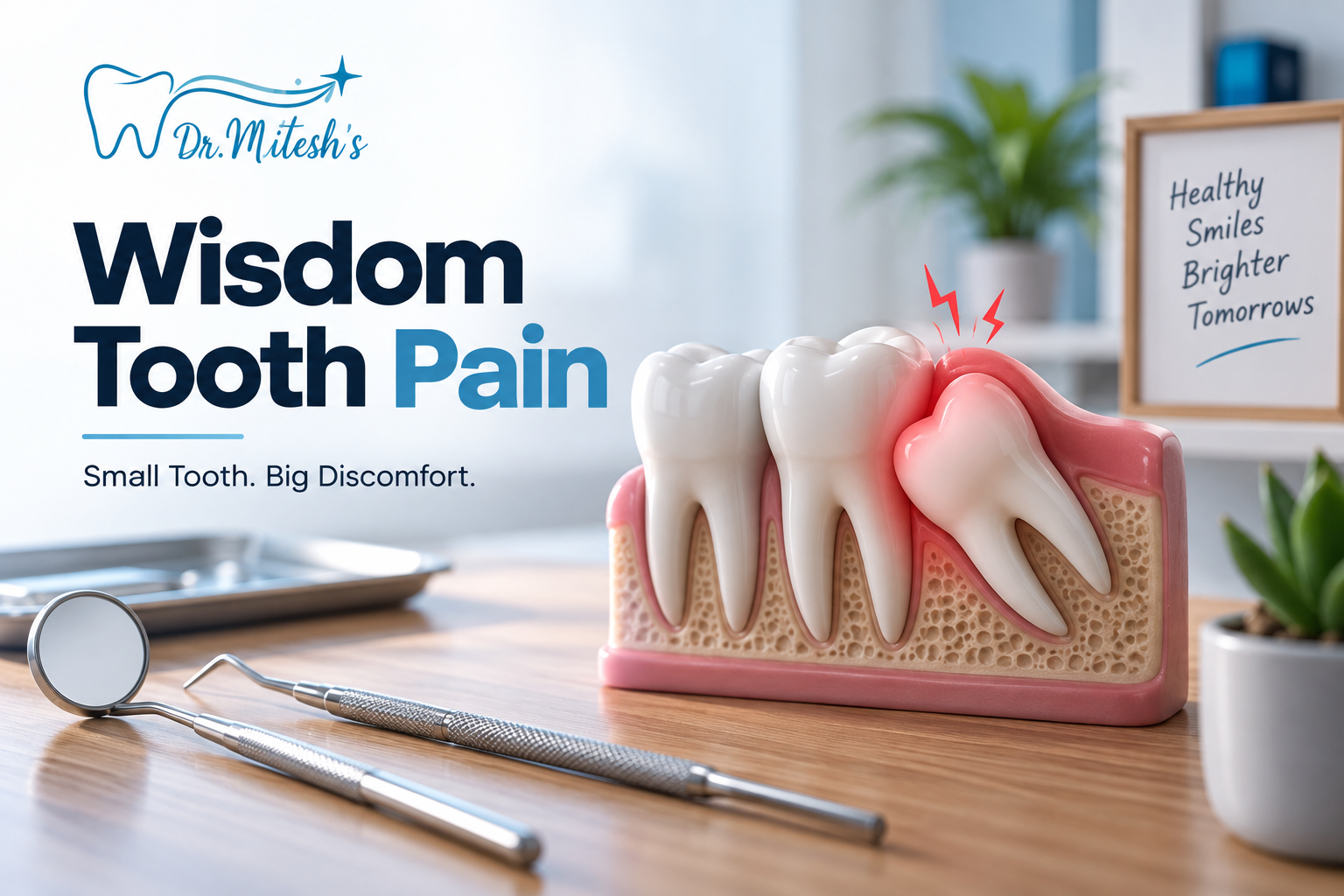
Wisdom tooth pain can start as mild discomfort at the back of your mouth and gradually become difficult to ignore. You may notice soreness while chewing, swollen gums, jaw discomfort, or pain that disappears for a few days and then comes back.
But why does a wisdom tooth hurt in the first place?
Wisdom teeth are the last permanent teeth to develop. While some people have no problems with them, others may experience pain when there is not enough room for the tooth to grow properly, when it only partially comes through the gum, or when the surrounding area becomes inflamed or infected.
Understanding the possible cause of wisdom tooth pain can help you manage the discomfort and know when professional dental care may be necessary.
Why Do Wisdom Teeth Cause Pain?
Wisdom teeth, also called third molars, develop at the very back of the mouth.
When there is enough space and the tooth grows into a healthy position, it may not cause any trouble. Problems are more likely when the tooth does not have enough room to emerge normally.
It may grow at an angle, remain partly underneath the gum, or stay completely trapped below the gum or jawbone.
Because of their position, wisdom teeth can also be difficult to keep clean. Food particles and plaque may collect around them, contributing to gum inflammation, tooth decay, or infection.
Several different problems can therefore cause similar wisdom tooth symptoms.
An Impacted Wisdom Tooth Can Cause Discomfort
One common cause of wisdom tooth problems is impaction.
An impacted wisdom tooth is unable to fully emerge into its normal position. It may remain partly or completely underneath the gum.
Some impacted wisdom teeth cause no symptoms and may simply need monitoring. Others can cause pain, swelling, or problems with nearby tissues and teeth.
The discomfort may be felt at the back of the jaw and can sometimes become more noticeable while chewing.
Because the complete position of an impacted tooth cannot always be seen by looking inside the mouth, a dentist may recommend an X-ray to understand how it is positioned.
Partially Erupted Wisdom Teeth Can Irritate the Gums
Sometimes a wisdom tooth starts coming through the gum but does not fully erupt.
This can leave an area of gum tissue around the tooth where food particles and bacteria are more difficult to remove.
The surrounding gum may become red, swollen, tender, or painful. You might also notice discomfort when chewing or brushing near the affected area.
Keeping the area clean can be challenging because of its position at the back of the mouth. If the inflammation keeps returning, a dentist should assess why the area is repeatedly becoming irritated.
Infection Can Make Wisdom Tooth Pain Worse
A partially erupted wisdom tooth can create spaces where bacteria collect.
In some cases, this may lead to infection around the tooth and surrounding gum tissue.
Possible symptoms include increasing pain, swelling, tenderness, unpleasant taste, bad breath, or difficulty opening the mouth comfortably.
An infection should not simply be covered up with pain-relieving medication. While medication may temporarily reduce discomfort, the underlying dental problem may still need treatment.
Increasing swelling, fever, pus, significant difficulty opening your mouth, or difficulty swallowing should receive prompt professional attention.
Tooth Decay May Be the Source of Pain
Wisdom teeth are located in one of the hardest areas of the mouth to clean.
Even people who brush regularly may find it difficult to reach the back and sides of these teeth effectively.
When plaque and food remain around the tooth, decay can develop. A decayed wisdom tooth may cause sensitivity, aching, or pain while eating.
The neighbouring tooth may also be affected if the area between the teeth is difficult to clean.
A dental examination can help determine whether the discomfort is actually coming from the wisdom tooth, the tooth next to it, or the surrounding gum.
What Are Common Signs of a Wisdom Tooth Problem?
Wisdom tooth problems do not feel exactly the same for everyone.
Some people experience occasional soreness, while others have stronger or recurring pain.
Common symptoms can include:
- Pain or tenderness behind the last molar
- Red or swollen gums
- Discomfort while chewing
- Jaw tenderness
- Difficulty opening the mouth comfortably
- Food getting trapped around the back tooth
- Bad breath or an unpleasant taste
- Swelling around the jaw or cheek
Pain that repeatedly disappears and returns can still indicate an unresolved problem.
How Can You Get Relief From Wisdom Tooth Pain?
The right way to relieve wisdom tooth pain depends on what is causing it.
For mild discomfort, keeping the area clean is particularly important. Brush the back teeth carefully using a soft-bristled toothbrush. Removing trapped food and plaque may help reduce additional irritation around a partially erupted tooth.
Gentle rinsing with warm salt water may temporarily soothe irritated gum tissue and help keep the area clean.
Avoid poking or pressing the painful gum with your fingers or other objects. You can also try chewing on the opposite side when biting near the wisdom tooth is uncomfortable.
These measures may provide temporary comfort, but they cannot correct problems such as significant impaction, decay, or infection.
Can Painkillers Help With Wisdom Tooth Pain?
Over-the-counter pain medicines may provide temporary relief for some people when used appropriately.
However, medicines do not explain why the wisdom tooth is hurting.
They should not become a way of repeatedly postponing dental care when the pain keeps returning.
Medication may also be unsuitable for some people because of medical conditions, allergies, pregnancy, or interactions with other medicines. Follow the product instructions and speak with a healthcare professional if you are unsure what is appropriate for you.
Never place aspirin or another pain-relieving tablet directly against the painful tooth or gum.
When Is Home Care Not Enough?
Temporary home care may help with mild discomfort, but it cannot solve every wisdom tooth problem.
Arrange a dental examination when pain persists, repeatedly returns, becomes stronger, or interferes with eating and normal activities.
You should also seek dental care when there is noticeable gum or facial swelling, persistent bad taste, discharge around the tooth, or difficulty opening your mouth.
Fever, worsening swelling, or significant difficulty swallowing requires prompt assessment. Severe difficulty breathing or swallowing requires urgent medical attention.
For more information about situations where removal may be considered, read this guide on wisdom tooth pain and when extraction is necessary.
How Will a Dentist Examine Wisdom Tooth Pain?
A dentist will usually begin by examining the painful area.
They may check how much of the wisdom tooth has erupted, whether the surrounding gum is inflamed, whether food is becoming trapped, and whether nearby teeth show signs of problems.
An X-ray may be recommended when more information about the position of the wisdom tooth is needed.
This can help the dentist assess the position of the tooth beneath the gum and surrounding structures.
Once the cause is understood, suitable treatment options can be discussed.
Does Pain Mean the Wisdom Tooth Must Be Removed?
Not necessarily.
A painful wisdom tooth does not automatically require extraction.
The appropriate treatment depends on the cause of the pain, the position and condition of the tooth, whether the problem keeps returning, and whether nearby teeth or gums are being affected.
Some wisdom teeth can remain in place when they are healthy, properly positioned, and easy to clean.
In other situations, repeated infection, significant decay, persistent pain, or problems associated with an impacted tooth may lead a dentist to consider removal.
The decision should be based on a dental examination rather than pain alone.
Getting the Right Care for Wisdom Tooth Pain
Wisdom tooth pain can have several causes, which is why identifying the problem is more important than simply trying to stop the discomfort.
Home care may temporarily help with mild irritation, but persistent or recurring symptoms deserve professional assessment.
At Dr. Mutha's Dental Specialty Centre, patients can have wisdom tooth concerns examined to understand whether discomfort may be related to impaction, gum inflammation, decay, infection, or another dental problem.
When appropriate, the dentist can discuss suitable treatment options based on the condition and position of the tooth.
Rather than repeatedly managing recurring pain at home, getting the tooth examined can help you understand what is causing the problem and what to do next.
Frequently Asked Questions
Why does my wisdom tooth hurt?
Wisdom tooth pain may be related to impaction, gum inflammation, infection, tooth decay, food trapping, or problems affecting the surrounding area. A dental examination can help determine the cause.
How can I relieve wisdom tooth pain at home?
Careful brushing, keeping the area clean, gentle warm salt-water rinses, and avoiding chewing on the painful side may provide temporary relief. Persistent pain still needs dental assessment.
Can wisdom tooth pain go away on its own?
Some discomfort may temporarily settle, particularly when mild gum irritation improves. However, recurring pain can indicate that the underlying cause remains.
Does wisdom tooth pain always mean extraction?
No. Whether extraction is appropriate depends on the tooth's position, condition, symptoms, and effect on nearby teeth and tissues.
When should I see a dentist for wisdom tooth pain?
Arrange an examination when pain persists, keeps returning, becomes stronger, or is accompanied by swelling, discharge, bad taste, or difficulty opening the mouth. Worsening swelling, fever, or significant swallowing difficulty should be assessed promptly.

 Arabic
 French
 Spanish
 Portuguese
 Deutsch
 Turkish
 Dutch
Dutch
 Italiano
 Russian
 Romaian
 Portuguese (Brazil)
 Greek
Greek