
3PL Logistics Company in India: What to Evaluate Before Outsourcing
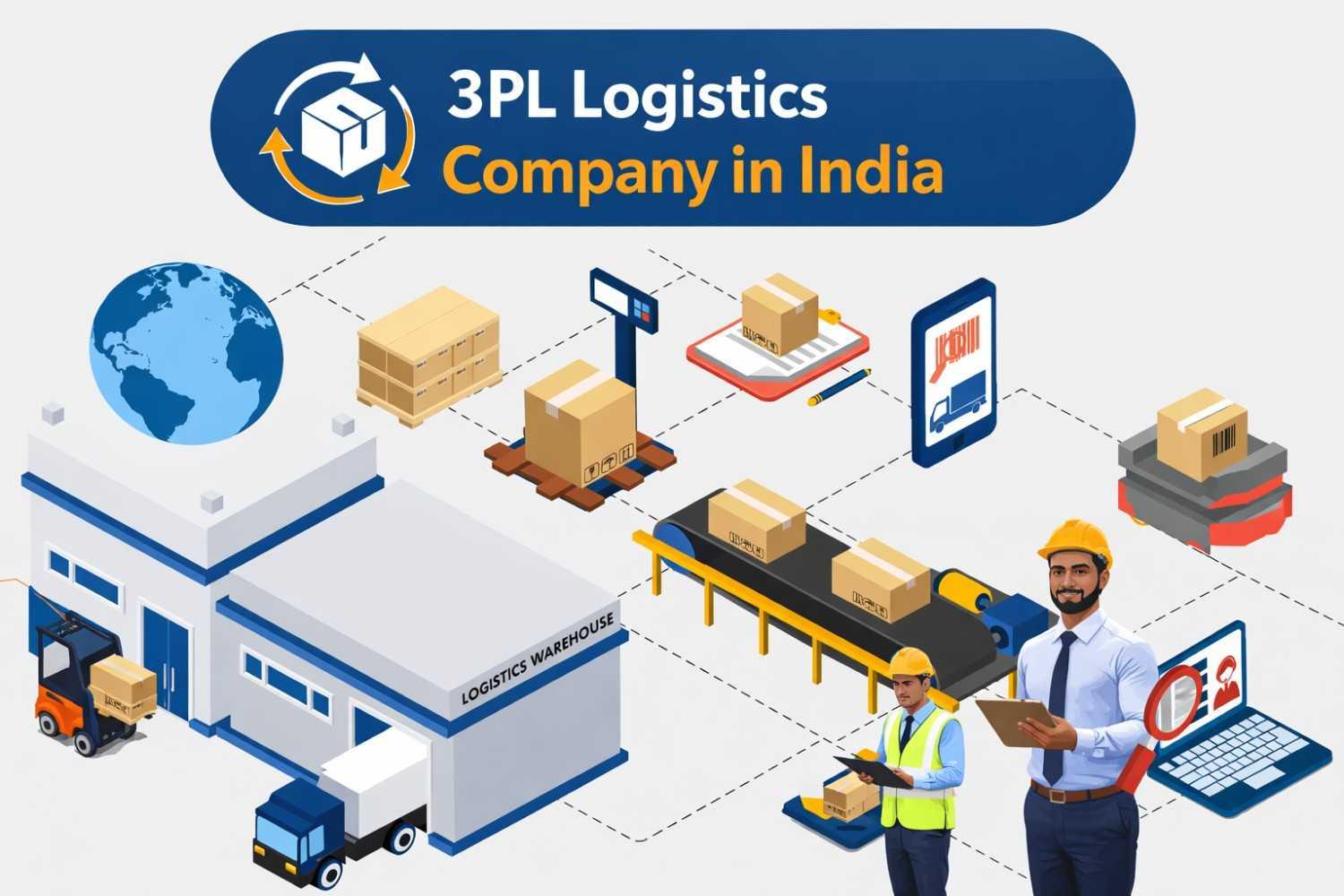
A logistics operation can look perfectly manageable until order volume starts moving faster than the systems built to handle it. More stock arrives, more locations need replenishment, customer delivery expectations become tighter, and suddenly the team that was once spending an hour coordinating shipments is spending most of the day chasing them.
This is where a 3PL logistics company in India can become relevant. But outsourcing logistics is not automatically a smart decision. If the underlying process is disorganised, handing it to a third party can simply move the confusion from one desk to another.
The real question for logistics teams is different: which parts of the supply chain should remain under internal control, and which activities can be handled more effectively by an external logistics partner?
That is where the discussion around 3PL becomes much more useful.
Why 3PL Has Become an Operational Decision, Not Just a Transporting Choice
There was a time when outsourcing logistics largely meant giving shipments to a transporter and tracking whether they arrived. That model is too narrow for many businesses now.
A growing company may have inventory sitting at multiple locations, regular stock transfers, dealer replenishment, e-commerce orders, returns, reverse movements, and different delivery requirements for different customers. Managing all of this internally requires people, warehouse space, transportation arrangements, technology, and constant coordination.
The cost is not always visible on a freight invoice.
A warehouse employee spending hours reconciling inventory is a cost. A sales team calling operations because an order has not moved is a cost. Stock sitting in the wrong location while another facility runs short is a cost. Emergency transportation arranged because routine planning failed is also a cost.
In reality, this is where many logistics operations start becoming expensive without looking expensive.
A third-party logistics service provider can take responsibility for selected activities and connect them into a more structured operating model. The value is not simply that someone else is moving the goods. The value comes from reducing the number of disconnected activities the business has to coordinate itself.
How a 3PL Logistics Company in India Changes the Day-to-Day Workflow
Consider a manufacturer supplying products to distributors across several states.
The manufacturer may be good at production but may not want to operate warehouses in every market. It could rent facilities independently, hire warehouse staff, negotiate with several transporters, implement inventory software, and build its own dispatch process.
That is possible, but it creates another business function to manage.
A 3PL arrangement can bring warehousing, inventory handling, transportation coordination, order processing, and distribution under one operating framework. Depending on the contract, the logistics partner may receive goods, store them, process orders, prepare consignments, arrange transportation, and provide shipment visibility.
The important point is that the business does not necessarily need to outsource everything.
A company might retain control over procurement and demand planning while outsourcing warehousing and distribution. Another may outsource fulfilment but retain its own transportation contracts. A larger operation might use a partner across several stages.
There is no universal 3PL model. The right scope depends on where the internal operation is losing time, money, or visibility.
Inventory Management Logistics Services Often Matter More Than Freight Rates
One of the easiest mistakes in 3PL evaluation is focusing too heavily on transportation pricing.
For many businesses, inventory is a bigger operational concern than the freight movement itself.
A product sitting in the wrong warehouse cannot fulfil an order efficiently. Overstock ties up working capital. Poor stock rotation can create ageing inventory. Incorrect inventory records create another problem because planners start making decisions using numbers they cannot trust.
This is why inventory management logistics services deserve serious attention when comparing providers.
A capable logistics operation should have clear processes for receiving, put-away, stock identification, order picking, packing, dispatch, cycle counting, and reconciliation. The technology supporting these activities matters, but process discipline matters just as much.
Honestly speaking, a sophisticated dashboard cannot compensate for poor warehouse practices.
If physical stock and system stock regularly disagree, adding another software platform will not magically solve the problem. The business needs accurate processes first, followed by technology that makes those processes easier to control.
The Difference Between a 3PL Partner and a Transporter
The two are often treated as interchangeable, but they serve different purposes.
A transporter is primarily concerned with moving cargo from one point to another. A 3PL provider can have a much wider responsibility across the supply chain.
That distinction becomes important when a company is dealing with multiple warehouses, different inventory locations, recurring dispatches, returns, and customer-specific delivery requirements.
For example, imagine a business receiving 500 orders every week. If the transportation company only picks up packed shipments, the business still has to manage inventory, warehouse labour, order preparation, dispatch planning, documentation, and exception handling.
A 3PL arrangement can potentially absorb several of those responsibilities.
This does not mean every business needs a full-service provider. If transportation is the only operational problem, paying for a broad logistics package may add unnecessary complexity.
The smarter question is: what problem are you actually outsourcing?
What to Look for in Affordable 3PL Logistics Solutions
The word “affordable” can be misleading in logistics.
The lowest monthly quotation is not necessarily the lowest-cost solution. A provider may offer an attractive warehouse rate but charge heavily for handling, storage, additional labour, documentation, special movements, or returns.
A more meaningful comparison looks at the total operating cost.
Before signing a contract, logistics teams should understand how charges are calculated and what activities are included. They should also examine how the provider handles exceptions because normal shipments rarely tell the full story.
A useful evaluation should cover:
-
Storage, handling, transportation, and value-added charges
-
Inventory accuracy and reporting processes
-
Order processing and dispatch timelines
-
Technology integration and shipment visibility
-
Returns, damaged goods, shortages, and other exceptions
-
Scalability when volumes increase or locations change
This is where a detailed service-level agreement becomes important. Responsibilities should be clear enough that neither side has to debate ownership every time something goes wrong.
End-to-End 3PL Logistics Services Need Strong Coordination
The phrase end-to-end 3PL logistics services sounds attractive, but the real test is how well the individual stages connect.
A company can have a warehouse partner, transportation partner, and inventory system and still have a fragmented supply chain.
For instance, the warehouse may finish an order on time, but the transportation team may collect it a day later. Or a shipment may reach the destination while the receiving location is not prepared. Each individual activity appears reasonable, yet the overall customer experience suffers.
Good coordination is therefore more important than simply having more services under one contract.
For logistics managers, one useful way to evaluate a provider is to follow a shipment from beginning to end. Start with the purchase order or inbound receipt, then follow inventory entry, storage, order allocation, picking, dispatch, transportation, delivery confirmation, and returns if applicable.
Where does information change hands? Where can an error occur? Who receives the alert when something goes wrong?
Those answers tell you much more than a service brochure.
Choosing Between 3PL Logistics Companies in India Requires More Than a Price Comparison
When comparing 3PL logistics companies in India, logistics teams often create a table of warehouse rates and transportation charges. That is useful, but incomplete.
Operational compatibility matters.
A provider experienced in e-commerce fulfilment may not necessarily be the right fit for an industrial manufacturer with palletised B2B shipments. Likewise, a company experienced in long-distance transportation may not have the warehouse processes needed for high-SKU inventory.
The provider's existing network can also matter. If your business expects to expand into new markets, the partner should have the operational ability to support that expansion rather than forcing you to renegotiate the model every time the network changes.
Another overlooked issue is communication. Ask what happens when a shipment is delayed, inventory does not reconcile, or a customer changes an order after processing. The quality of escalation during an exception often tells you more about a logistics provider than a presentation about its normal operations.
When Should a Business Actually Consider a 3PL Logistics Services in India?
Outsourcing becomes worth examining when logistics has stopped being a manageable support activity and started consuming management attention.
This could happen when warehouse capacity is becoming restrictive, transportation coordination is taking too much internal effort, inventory accuracy is declining, or expansion into another market would require significant infrastructure investment.
It can also make sense when a company wants to test a new geography without immediately building its own logistics network.
On the other hand, outsourcing may not solve much if shipment volumes are very low, processes are still changing every few weeks, or the company has not clearly defined its logistics requirements.
A 3PL provider cannot decide what inventory the business should hold, which customers should receive priority, or what delivery promise the company should make. Those are commercial decisions.
The logistics partner should execute against a clear operating model.
What 3PL Will Look Like in 2026 and Beyond
The role of third-party logistics is likely to become more data-driven, but the practical side of logistics will remain important.
Businesses are increasingly looking for better inventory visibility, faster exception identification, integrated order information, and more accurate planning. Warehouse systems, transportation platforms, analytics, automation, and AI-supported forecasting can help with these tasks.
But technology should support logistics decisions rather than become the decision itself.
A system may identify that stock is moving slowly. Someone still needs to decide whether to relocate it, reduce replenishment, change the assortment, or investigate demand.
This is why future-ready logistics teams will need both operational knowledge and data literacy.
The strongest 3PL relationships will probably be those where the provider is not treated merely as an outsourced warehouse or transport desk. Instead, both sides will use shared data to examine recurring delays, inventory problems, route performance, capacity requirements, and changing demand.
That creates a much more useful partnership.
The Practical Way to Decide Whether 3PL Is Right for Your Operation
Before approaching a third party logistics service provider, map your current logistics process honestly.
Do not start with the question, “How much will outsourcing cost?”
Start with, “Where are we losing time, money, control, or visibility today?”
Once those problem areas are clear, it becomes easier to decide what should be outsourced and what should remain internal.
For some businesses, the answer may be warehousing. For another, it may be transportation coordination. For a rapidly expanding company, it could be a combination of fulfilment, inventory, and distribution.
The objective should not be to outsource as much as possible. It should be to create a logistics structure that the business can actually control as it grows.
That is the practical value of 3PL logistics services in India. Done properly, outsourcing can reduce operational friction without forcing the business to give up visibility or decision-making control.
The right partner should make the supply chain easier to manage, not harder to understand.
FAQs
1. What does a 3PL logistics company in India actually do?
Ans. A 3PL provider can manage activities such as warehousing, inventory handling, order fulfilment, transportation coordination, distribution, and returns. The exact scope depends on the business requirements and service agreement.
2. Is 3PL suitable for small and growing businesses?
Ans. It can be useful when building an internal logistics operation would require significant warehouse, staffing, technology, or transportation investment. The decision should be based on actual operating requirements rather than company size alone.
3. What is the difference between 3PL and a transport company?
Ans. A transport company primarily focuses on moving goods, while a 3PL provider can manage several connected logistics activities. These may include warehousing, inventory, fulfilment, distribution, and transportation.
4. How do I choose a third party logistics service provider?
Ans. Evaluate the provider against your actual shipment profile, warehouse requirements, inventory complexity, technology needs, service levels, exception handling, network coverage, and total cost. Do not compare providers only on transportation rates.
5. Are affordable 3PL logistics solutions always the cheapest option?
Ans. Not necessarily. A lower quoted rate can be offset by handling fees, storage charges, poor inventory accuracy, delays, or additional transportation costs. Compare the complete operating cost and service scope.

 Arabic
 French
 Spanish
 Portuguese
 Deutsch
 Turkish
 Dutch
Dutch
 Italiano
 Russian
 Romaian
 Portuguese (Brazil)
 Greek
Greek