
Crypto.com Wallet: A Guide to Managing Crypto and Web3 Assets
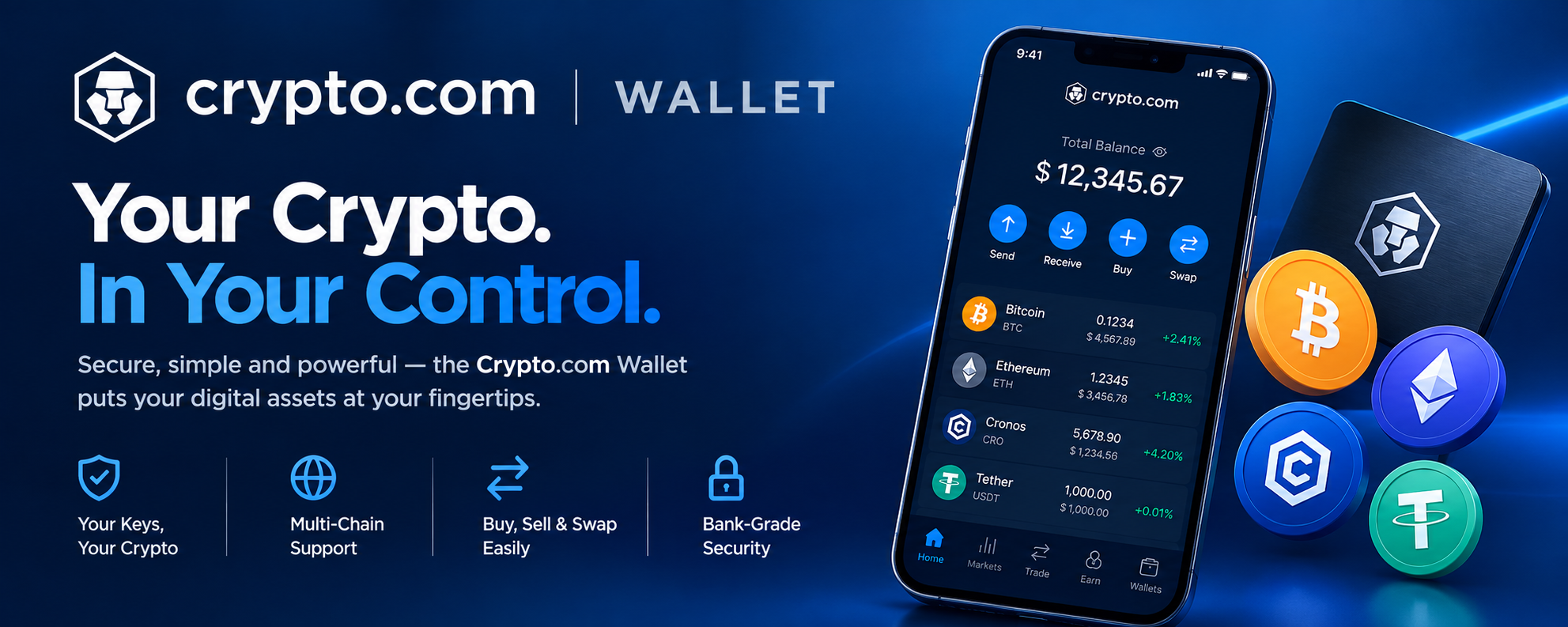
The Crypto.com Wallet, now presented as Crypto.com Onchain, is a non-custodial, multi-chain wallet designed for users who want direct control over their digital assets and private keys. It provides tools for storing, sending, receiving, swapping, and managing cryptocurrencies while also connecting users with decentralized applications and other Web3 services.
What Is Crypto.com Wallet?
Crypto.com Onchain is a self-custodial wallet, meaning users control their wallet's private keys and are responsible for protecting their recovery phrase. Unlike a centralized custodial account, the wallet does not require users to maintain a Crypto.com App account simply to store, send, or receive cryptocurrency.
The wallet supports assets across multiple blockchain networks, including Bitcoin, Ethereum, Solana, and Cronos. Crypto.com also provides options for managing tokens across different chains from the wallet interface.
Key Features of Crypto.com Wallet
One of the main features of the Crypto.com Wallet is multi-chain asset management. Users can create or import wallets and manage supported cryptocurrencies from a single application. The platform also offers tools for buying, swapping, sending, and receiving crypto.
Crypto.com states that its Onchain wallet supports more than 1,000 tokens across major chains. Users can also access decentralized applications, NFT-related services, and other Web3 functionality through the wallet.
The wallet is also available beyond the mobile application. Crypto.com provides a Chrome browser extension that allows users to interact with decentralized applications directly through a desktop browser. The extension supports multiple blockchains and can be connected with the mobile wallet.
Crypto.com Wallet and the Crypto.com App
The Crypto.com App and Crypto.com Onchain serve different purposes. The Crypto.com App is a centralized platform, while Onchain is a user-custodied wallet where users control their private keys. A Crypto.com account is not required to use Onchain independently.
However, users who have both products can connect their Crypto.com App account with their Onchain wallet. Crypto.com provides an account-connection process involving email authorization and either passkeys or two-factor authentication.
This distinction is important because users should understand whether their assets are held through a centralized service or controlled directly through a self-custodial wallet.
How to Set Up Crypto.com Wallet
Setting up Crypto.com Onchain involves downloading the application from a supported app store, selecting the option to create a new wallet, and establishing a passcode. Biometric verification can also be enabled.
During setup, the wallet generates a recovery phrase. This phrase is critical because it can be used to restore access to the wallet and its assets. Crypto.com recommends backing up the recovery phrase securely.
Users can also import an existing wallet using a compatible 12-, 18-, or 24-word recovery phrase. This allows wallets created with supported third-party applications to be imported into Crypto.com Onchain.
Security and Recovery
Self-custody provides greater direct control but also places additional responsibility on the wallet owner. The recovery phrase should never be casually shared, entered into unknown websites, or provided to people claiming to offer technical support.
Crypto.com says its Onchain wallet encrypts private keys locally on the device and provides security features including biometric authentication and two-factor authentication.
A recovery phrase should be stored securely and kept private. Anyone who obtains the phrase may potentially gain access to the assets controlled by that wallet. Users should therefore verify wallet addresses, blockchain networks, and transaction details before confirming transfers.
Sending and Receiving Cryptocurrency
Crypto.com Onchain allows users to send and receive supported cryptocurrencies directly through blockchain networks. Because transactions are processed on-chain, network fees may apply depending on the blockchain and network conditions. Crypto.com explains that these fees are associated with the relevant blockchain rather than being a Crypto.com network fee.
For example, sending an ERC-20 token may require the appropriate amount of ETH to cover network fees. Selecting the correct blockchain network is therefore an important part of completing a transaction successfully.
Web3 and DeFi Access
Another important aspect of the Crypto.com Wallet is its connection to Web3. Users can access decentralized applications, explore NFT-related services, swap tokens, and interact with supported decentralized finance products. Crypto.com currently describes Onchain as a platform combining wallet management with various onchain services.
The ecosystem also includes staking and other earning-related services, although availability can depend on the supported asset, blockchain, product, and user's jurisdiction. Users should review current terms and eligibility before using these services.
Conclusion
The Crypto.com Wallet, through Crypto.com Onchain, provides a self-custodial approach to cryptocurrency and Web3 management. Its multi-chain support, token management, swaps, dApp access, browser extension, and connection with the Crypto.com ecosystem make it a broad wallet platform.
The most important consideration with any self-custodial wallet is responsibility for the recovery phrase and transaction security. Users should download wallet software from official sources, protect their recovery credentials, verify networks and addresses carefully, and understand blockchain transaction fees before moving funds.
 Spanish
 English
 Arabic
 French
 Portuguese
 Deutsch
 Turkish
 Dutch
Dutch
 Italiano
 Russian
 Romaian
 Portuguese (Brazil)
 Greek
Greek