
Nadi Pariksha: Ayurvedic Pulse Reading, Its Meaning, Process and Importance in Ayurveda
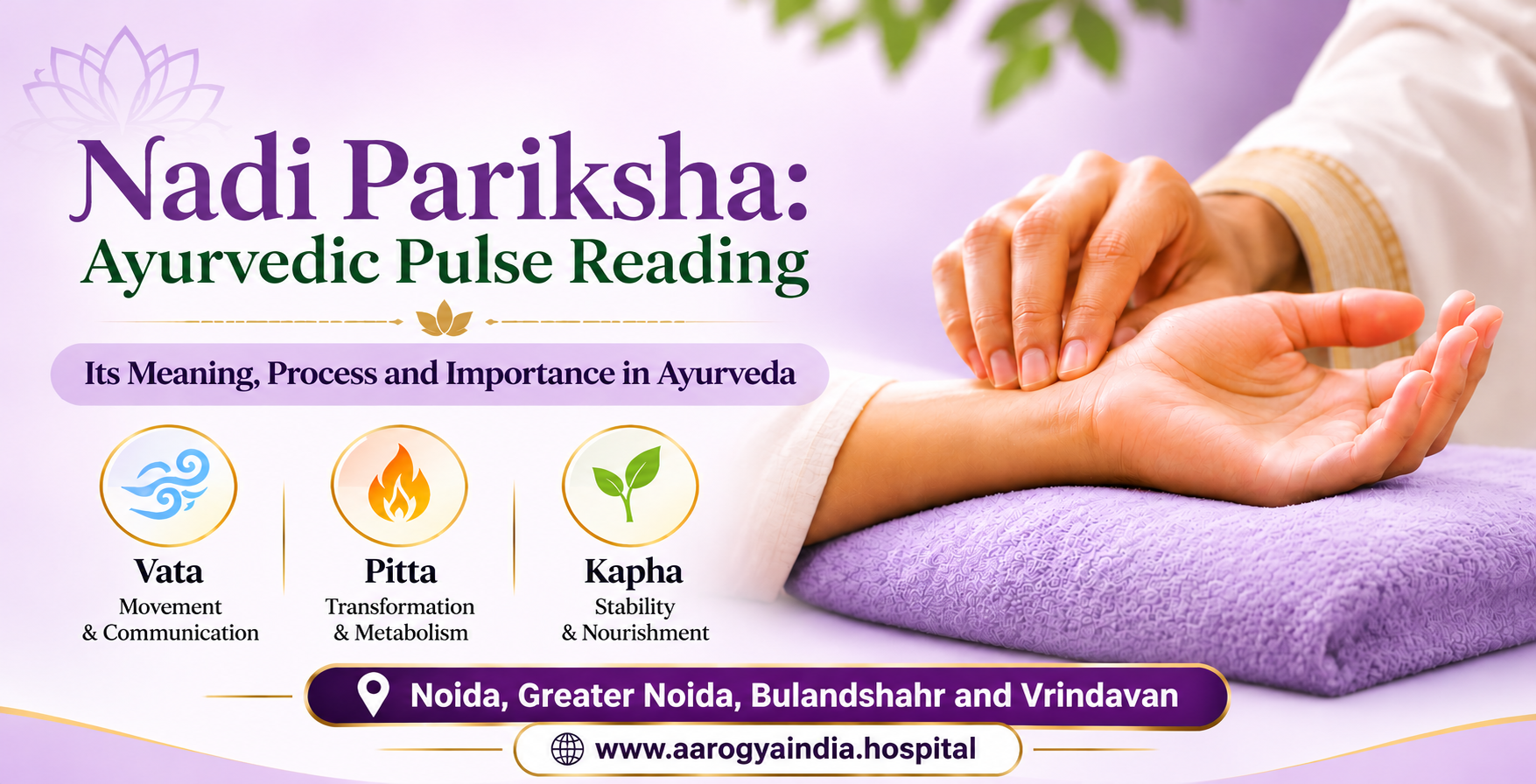
Nadi Pariksha, also known as Ayurvedic Pulse Reading, is a traditional examination technique used in Ayurveda to understand an individual's body constitution and assess the traditional balance of the three doshas – Vata, Pitta and Kapha.
Ayurveda, India's traditional system of healthcare, emphasises understanding the individual rather than following the same wellness approach for everyone. Nadi Pariksha is one of the traditional methods through which an experienced Ayurvedic practitioner examines the pulse and considers its characteristics as part of a broader health assessment.
Unlike a routine pulse check that primarily measures heart rate and rhythm, traditional Ayurvedic pulse examination involves interpreting different qualities of the pulse through Ayurvedic principles.
Today, many people are interested in understanding their Prakriti (natural body constitution), Vikriti (current state of balance), dietary habits and lifestyle through traditional Ayurvedic consultations.
At Aarogya India Wellness Hospital, we recognise the importance of individualised Ayurvedic consultation and patient-centred healthcare. Understanding traditional Ayurvedic principles can help individuals make informed decisions about their wellness journey.
In this guide, we will explore what Nadi Pariksha is, how Ayurvedic pulse reading works, the three doshas, its traditional importance, examination process and frequently asked questions.
What Is Nadi Pariksha in Ayurveda?
Nadi Pariksha is a traditional Ayurvedic pulse examination technique commonly known as Ayurvedic Nadi Diagnosis or Ayurvedic Pulse Reading.
The Sanskrit word Nadi refers to a channel or flow, while Pariksha means examination. Together, Nadi Pariksha refers to the traditional examination of the pulse.
In Ayurvedic practice, a trained practitioner generally examines the radial pulse near the wrist using the fingers. The practitioner observes characteristics such as:
-
Pulse rhythm and regularity
-
Strength and intensity
-
Movement and sensation
-
Depth of the pulse
-
Overall pulse characteristics
These observations are traditionally interpreted in relation to the Tridosha theory of Ayurveda, which includes Vata, Pitta and Kapha.
According to traditional Ayurvedic principles, every individual has a unique combination of these three doshas. Understanding this combination is considered important when discussing personalised dietary recommendations, lifestyle practices and Ayurvedic wellness approaches.
Nadi Pariksha is traditionally used alongside other assessment methods, including medical history, physical examination and lifestyle evaluation.
It is important to understand that Ayurvedic pulse reading is not a scientifically validated standalone diagnostic test for diseases. Conditions such as diabetes, hypertension and heart disease require appropriate medical investigations.
Understanding the Three Doshas in Ayurvedic Pulse Reading
The Tridosha theory is one of the fundamental concepts of Ayurveda. According to this traditional framework, Vata, Pitta and Kapha represent three functional principles associated with different activities of the body.
Ayurvedic practitioners consider these doshas when understanding an individual's constitution and current state of balance.
1. Vata Dosha – The Principle of Movement
Vata Dosha is traditionally associated with the elements of air and space. It represents movement, communication and various activities of the body.
Some traditional characteristics associated with Vata include:
-
Dryness and lightness
-
Irregular appetite
-
Variable energy levels
-
Sensitivity to cold
-
Irregular sleeping patterns
In traditional Nadi Pariksha descriptions, a Vata-associated pulse is called Sarpa Gati, which is compared to the movement of a snake.
2. Pitta Dosha – The Principle of Transformation
Pitta Dosha is traditionally associated with fire and water. It represents transformation, digestion and metabolism in the Ayurvedic understanding of the body.
Traditional characteristics associated with Pitta include:
-
Heat and intensity
-
Strong appetite
-
Sensitivity to excessive heat
-
Sweating easily
-
Irritability under stress
In traditional Ayurvedic pulse descriptions, the Pitta-associated pulse is called Manduka Gati, which is compared to the movement of a frog.
3. Kapha Dosha – The Principle of Stability
Kapha Dosha is traditionally associated with earth and water. It represents stability, structure, nourishment and lubrication.
Traditional characteristics associated with Kapha include:
-
Stability and consistency
-
Heaviness
-
Slower digestion
-
Steady energy
-
A preference for warmth and physical activity
In traditional pulse descriptions, the Kapha-associated pulse is called Hamsa Gati, which is compared to the smooth movement of a swan.
Important: These descriptions belong to traditional Ayurvedic knowledge. They should not be treated as scientifically established pulse patterns or used independently to diagnose medical conditions.
What Are the Three Types of Ayurvedic Pulse Movements?
Classical Ayurvedic descriptions commonly discuss three types of pulse movements associated with the three doshas.
1. Sarpa Gati – Vata Dosha: Sarpa Gati is traditionally associated with Vata Dosha in Ayurveda. The pulse movement is compared to the movement of a snake, which is believed to represent qualities such as lightness, quickness and irregularity. In traditional Ayurvedic pulse reading, this movement is interpreted as a characteristic associated with Vata.
2. Manduka Gati – Pitta Dosha: Manduka Gati is traditionally associated with Pitta Dosha. The pulse movement is compared to the jumping movement of a frog and is described as active, noticeable and forceful. According to traditional Ayurvedic principles, this pulse characteristic represents the qualities associated with Pitta.
3. Hamsa Gati – Kapha Dosha: Hamsa Gati is traditionally associated with Kapha Dosha. The pulse movement is compared to the smooth and graceful movement of a swan. It is traditionally described as steady, deep and relatively slow, representing the stability and consistency associated with Kapha.
A trained Ayurvedic practitioner interprets these traditional characteristics within the broader framework of Ayurvedic assessment.
The interpretation may vary according to the practitioner's training, experience and examination approach.
How Does Nadi Pariksha Work? Understanding the Ayurvedic Pulse Examination Process
Nadi Pariksha is generally performed through a non-invasive examination of the radial pulse near the wrist.
The process may vary between Ayurvedic practitioners, but a traditional consultation commonly involves the following steps.
Step 1: Initial Health Consultation
The practitioner begins by discussing the individual's health history, lifestyle, dietary habits, sleeping patterns and current concerns.
This information helps provide context for the overall Ayurvedic assessment.
Step 2: Pulse Examination
The individual is generally asked to sit comfortably and relax.
The practitioner gently places their fingers over the radial artery near the wrist to feel the pulse.
Step 3: Traditional Pulse Assessment
The practitioner examines different pulse characteristics, including rhythm, strength, movement and depth.
These observations are traditionally considered in relation to Vata, Pitta and Kapha.
Step 4: Understanding Prakriti and Vikriti
The practitioner may consider the individual's Prakriti (natural constitution) and Vikriti (current state of balance) as part of the Ayurvedic assessment.
Step 5: Personalised Ayurvedic Guidance
Following the complete consultation, the practitioner may discuss appropriate dietary habits, lifestyle modifications and relevant Ayurvedic care options.
The examination should be considered one part of a broader consultation rather than an independent medical diagnosis.
What Is the Difference Between Prakriti and Vikriti in Ayurveda?
Prakriti and Vikriti are two important concepts in traditional Ayurvedic health assessment.
Understanding the difference between them helps explain why Ayurveda considers both an individual's natural constitution and their current condition.
Prakriti – Natural Body Constitution
Prakriti refers to an individual's natural constitution, traditionally believed to be established at conception.
According to Ayurveda, every person has a unique combination of Vata, Pitta and Kapha.
Traditional Prakriti classifications include:
-
Vata-dominant constitution
-
Pitta-dominant constitution
-
Kapha-dominant constitution
-
Vata-Pitta constitution
-
Pitta-Kapha constitution
-
Vata-Kapha constitution
-
Tridoshic constitution
Vikriti – Current State of Balance
Vikriti refers to an individual's current state in the Ayurvedic framework.
Traditional Ayurvedic assessment may consider factors such as:
-
Food and dietary habits
-
Sleep quality
-
Physical activity
-
Stress and emotional well-being
-
Seasonal changes
-
Daily lifestyle patterns
Why are Prakriti and Vikriti important?
Prakriti represents the natural constitution, while Vikriti focuses on the current state. Ayurveda considers both when discussing individualised wellness recommendations.
What Are the Traditional Benefits of Nadi Pariksha?
Nadi Pariksha has an important place in traditional Ayurvedic practice and education. Its purpose is generally understood as supporting a broader assessment of an individual's constitution and wellness requirements.
Some traditionally recognised applications include:
1. Understanding Individual Body Constitution
Nadi Pariksha is traditionally used to explore an individual's dosha combination and constitution.
This helps explain the Ayurvedic concept that different people may have different dietary and lifestyle requirements.
2. Supporting Personalised Ayurvedic Consultation
Ayurveda emphasises individualised healthcare.
Traditional pulse examination may form part of a consultation that considers personal health history, lifestyle habits and physical characteristics.
3. Exploring Vata, Pitta and Kapha
Nadi Pariksha provides an opportunity to understand the traditional Tridosha framework and how Ayurvedic practitioners interpret different pulse characteristics.
4. Encouraging Lifestyle Awareness
An Ayurvedic consultation may involve discussing eating habits, sleeping patterns, stress management and physical activity.
These factors are important considerations in maintaining general health and well-being.
5. Understanding Traditional Ayurvedic Principles
Nadi Pariksha introduces individuals to traditional concepts such as Prakriti, Vikriti and Tridosha, which are central to Ayurvedic philosophy.
Medical clarification: These are traditional applications and educational aspects, not proven diagnostic benefits. Nadi Pariksha alone cannot confirm or rule out any disease.
Can Nadi Pariksha Detect Diseases?
Many people search online for answers to questions such as whether Ayurvedic pulse reading can identify diabetes, thyroid disorders, blood pressure problems or other diseases.
It is important to understand the difference between traditional Ayurvedic assessment and modern medical diagnosis.
Nadi Pariksha is traditionally used to assess dosha-related characteristics. However, there is insufficient reliable scientific evidence to establish that pulse reading can accurately diagnose specific diseases.
It cannot independently confirm:
-
Diabetes or high blood sugar
-
High blood pressure
-
Thyroid disorders
-
Heart disease
-
Kidney or liver disease
-
Infections
-
Other medical conditions
Appropriate medical investigations, including blood tests, blood pressure measurements, ECG and other diagnostic procedures, may be required depending on the symptoms and clinical situation.
Individuals experiencing persistent symptoms should consult a qualified healthcare professional rather than relying exclusively on traditional pulse examination.
Nadi Pariksha vs Modern Medical Pulse Examination
1. Approach: Ayurvedic Nadi Pariksha follows traditional Ayurvedic principles to understand an individual's body constitution and the balance of Vata, Pitta and Kapha doshas. In contrast, modern pulse examination is a clinical medical procedure used by healthcare professionals to assess cardiovascular health and identify changes in pulse characteristics.
2. Main Focus: The primary focus of Ayurvedic Nadi Pariksha is the traditional assessment of Vata, Pitta, Kapha and an individual's Prakriti (natural constitution). Modern pulse examination primarily focuses on heart rate, rhythm, regularity and pulse strength to evaluate aspects of cardiovascular function.
3. Method: In traditional Nadi Pariksha, an Ayurvedic practitioner uses their fingers to examine the pulse near the wrist and observes its different characteristics. Modern clinical pulse examination involves physical palpation and may also use medical instruments to measure heart rate, blood pressure and other cardiovascular parameters.
4. Interpretation: Ayurvedic Nadi Pariksha is interpreted according to traditional Ayurvedic concepts and principles. Modern clinical pulse examination is interpreted using established medical knowledge, clinical guidelines and evidence-based assessment methods.
5. Purpose: The purpose of Ayurvedic Nadi Pariksha is traditionally to understand an individual's constitution and support personalised Ayurvedic wellness guidance. Modern pulse examination is used as part of clinical evaluation to assess cardiovascular function and identify abnormalities that may require further medical investigation.
How Can Ayurveda Support a Healthy Lifestyle?
Ayurveda gives considerable importance to daily routines, dietary habits and lifestyle practices.
Alongside traditional assessments such as Nadi Pariksha, Ayurvedic practitioners may discuss suitable lifestyle modifications according to individual requirements.
Some general wellness practices include:
1. Follow a Consistent Daily Routine
Maintaining regular sleeping, waking and eating schedules can support healthier lifestyle habits.
2. Eat a Balanced Diet
Include nutritious foods such as vegetables, fruits, whole grains, pulses and suitable sources of protein.
3. Stay Physically Active
Walking, yoga and other appropriate physical activities can support overall fitness.
4. Maintain Healthy Sleep Habits
Follow a consistent sleeping schedule and create a comfortable sleeping environment.
5. Practise Stress Management
Meditation, breathing exercises and yoga may help support relaxation and emotional well-being.
6. Seek Qualified Ayurvedic Guidance
Consult a qualified practitioner before using Ayurvedic medicines, supplements or undergoing specialised therapies.
These lifestyle practices should complement appropriate medical care, not replace prescribed treatment.
Who Can Consider Nadi Pariksha?
People interested in traditional Ayurveda may consider an Ayurvedic consultation that includes Nadi Pariksha.
It may be relevant for individuals who:
-
I want to understand the traditional Vata, Pitta and Kapha concepts.
-
Are interested in learning about their Prakriti.
-
I want personalized Ayurvedic dietary guidance.
-
I wish to explore traditional wellness practices.
-
I want to discuss their lifestyle habits with an Ayurvedic practitioner.
-
Are interested in understanding traditional Ayurvedic approaches to health and wellness.
Nadi Pariksha should be performed by a suitably qualified practitioner. It is not a substitute for medical evaluation, particularly when an individual has persistent symptoms or an existing medical condition.
Why Choose Aarogya India Wellness Hospital for Ayurvedic Consultation?
Choosing an appropriate healthcare provider is an important part of exploring Ayurvedic treatment and wellness services.
Aarogya India Wellness Hospital focuses on traditional Ayurvedic principles, personalised consultation and patient-centred healthcare.
Our hospital has centres in Noida Sector 70, Greater Noida, Bulandshahr and Vrindavan, Uttar Pradesh.
Our approach to Ayurvedic healthcare includes:
-
Personalised Ayurvedic consultation.
-
Assessment of individual health concerns and medical history.
-
Understanding traditional Ayurvedic principles.
-
Dietary and lifestyle guidance.
-
Appropriate Ayurvedic treatment planning.
-
Panchakarma and wellness services, subject to professional assessment.
-
Patient education and follow-up guidance.
Our objective is to help individuals make informed decisions about their healthcare through responsible consultation and appropriate treatment planning.
Visit Aarogya India Wellness Hospital – Our Four Branch Locations
Aarogya India Wellness Hospital has four centres serving patients across different locations in Uttar Pradesh.
1. Aarogya India Wellness Hospital – Noida Sector 70
Visit our Noida Sector 70 centre to enquire about Ayurvedic consultation and available wellness services.
Location: Sector 70, Noida, Uttar Pradesh.
Google Business Profile: https://share.google/Ss07eKAL9BIVIB9ge
2. Aarogya India Wellness Hospital – Bulandshahr
Our Bulandshahr centre provides an opportunity for local residents to enquire about available Ayurvedic healthcare and consultation services.
Location: Bulandshahr, Uttar Pradesh.
Google Business Profile: https://share.google/XsyNI1giAHD2Xeq0K
3. Aarogya India Wellness Hospital – Greater Noida
Patients in Greater Noida can connect with our centre to learn more about available Ayurvedic consultation and wellness services.
Location: Greater Noida, Uttar Pradesh.
Google Business Profile: https://share.google/Gijj1cZP9LDjr4ttN
4. Aarogya India Wellness Hospital – Vrindavan
Our Vrindavan centre serves individuals interested in exploring traditional Ayurvedic consultation and wellness services.
Location: Vrindavan, Uttar Pradesh.
Google Business Profile: https://share.google/n7EJ6uhFCwqGFPzu6
To enquire about appointments and available services, visit:
Website: https://aarogyaindia.hospital/
Conclusion: Explore Traditional Ayurvedic Wisdom with Aarogya India Wellness Hospital
Nadi Pariksha, or Ayurvedic Pulse Reading, is a traditional examination technique that reflects Ayurveda's emphasis on understanding individual differences in health and constitution.
Through the concepts of Vata, Pitta, Kapha, Prakriti and Vikriti, this traditional practice provides an introduction to the Ayurvedic approach to personalised wellness.
However, responsible healthcare requires an understanding of both traditional practices and modern medical science. Nadi Pariksha should be considered a complementary traditional assessment and not a replacement for medical investigations or evidence-based treatment.
At Aarogya India Wellness Hospital, we believe that personalised consultation, appropriate healthcare guidance, balanced lifestyle habits and patient education are important parts of an individual's wellness journey.
If you are interested in learning more about Ayurvedic consultation and available wellness services, connect with our nearest Aarogya India centre.
Aarogya India Wellness Hospital – Supporting Your Journey Towards Better Health and Wellness.
Website: https://aarogyaindia.hospital/
Hospital Locations: Noida Sector 70 | Greater Noida | Bulandshahr | Vrindavan
 Spanish
 English
 Arabic
 French
 Portuguese
 Deutsch
 Turkish
 Dutch
 Italiano
 Russian
 Romaian
 Portuguese (Brazil)
 Greek